


Product introduction
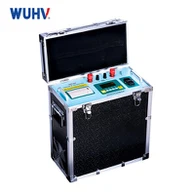
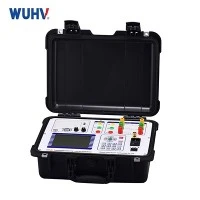
The UHV-105A CT PT Characteristic Tester utilizes imported core components and precision manufacturing processes, ensuring stable and reliable product performance. The instrument panel features an ergonomic design for simplified operation, enabling a single-operator setup to complete all testing procedures. Its powerful software automatically calculates and delivers test results. Equipped with built-in USB data transfer functionality, it seamlessly integrates with PC software to generate comprehensive test reports, facilitating efficient data management and significantly reducing the workload for testing personnel. The instrument includes a built-in thermal micro-printer for immediate hardcopy output of test data and curves. This fully-featured professional testing instrument is highly regarded in both laboratory and field settings for its robust capabilities.

Product Parameters
|
Project |
Parameter |
|
|
Working power supply |
AC220V ,50Hz |
|
|
Device output |
0-1200V 5kVA maximum setting value 20A |
|
|
High current output |
0~1000A |
|
|
Excitation accuracy |
≤ 0.5% (0.2% * reading+0.3% * range) |
|
|
Measurement of secondary winding resistance |
scope |
0.01~300Ω |
|
precision |
≤ 1.0% (0.4% * reading+0.6% * range) |
|
|
Secondary actual load measurement |
scope |
5~500VA |
|
precision |
≤ 0.5% (0.2% * reading+0.3% * range) ± 0.1VA |
|
|
Phase measurement (angle difference) |
scope |
1~99.9min |
|
resolution |
0.1min |
|
|
CT ratio measurement |
scope |
≤25000A/5A(5000A/1A) |
|
precision |
≤ 0.5% (0.2% * reading+0.3% * range) |
|
|
PT ratio measurement |
scope |
≤500kV |
|
precision |
≤ 0.5% (0.2% * reading+0.3% * range) |
|
|
Working environment |
temperature |
-10℃ ~ 40℃ |
|
humidity |
≤90% |
|
|
altitude |
≤1000m |
|
|
Size |
410mm × 260mm × 340mm |
|
|
Weight |
≤22kg |
|
Advantages of CT PT Characteristic Tester
Multiple Test Functions in One Device
The tester combines several functions, including excitation characteristic testing, turns ratio testing, polarity testing, and winding resistance measurement, depending on the model. This reduces the need for multiple instruments and makes routine testing more convenient.
Automated Testing
Some models support automatic testing, data calculation, and excitation curve plotting. These functions reduce manual work and help improve testing efficiency.
Clear and Easy-to-Read Results
Test data and characteristic curves make it easier to evaluate the excitation performance, transformation ratio, and other electrical characteristics of a transformer.
Helps Identify Potential Problems
By checking key electrical parameters, the tester helps identify issues such as an incorrect transformation ratio, reversed polarity, or abnormal excitation characteristics, providing useful information for maintenance.
Convenient Data Storage and Management
Some models support test data storage, data export, and report generation. These features make it easier to maintain test records and compare results before and after maintenance.
Suitable for Various Applications
The tester can be used for power engineering projects, substation acceptance tests, preventive maintenance, transformer manufacturing inspections, and electrical equipment maintenance. Its actual applications depend on the model and available functions.
Simplifies On-Site Testing
By combining multiple test functions in one instrument, the tester reduces the need to switch between devices and repeat wiring connections. This is particularly useful when testing different types of instrument transformers.
Core Application Scenarios of CT PT Characteristic Tester
1.Preventive Testing / Periodic Calibration:
This is the primary application. According to power equipment preventive testing regulations, in-service CTs and VTs require periodic verification to ensure measurement accuracy and protection reliability. This instrument can complete multiple critical tests in one go, avoiding the complexity of using multiple separate devices.
2.New Equipment Installation Acceptance:
Newly purchased or installed CTs/VTs must undergo comprehensive performance testing before commissioning to verify compliance with design specifications and contract requirements, ensuring the safety and stability of the grid from the outset.
3.Fault Diagnosis and Post-Maintenance Testing:
When protection relays malfunction (misoperation or failure to operate) or metering systems show abnormalities, it is necessary to investigate whether the instrument transformers are at fault (e.g., inter-turn shorts, reversed polarity, performance degradation). This instrument enables rapid fault localization.
After maintenance (e.g., winding replacement, insulation treatment), instrument transformers must be tested to confirm restored or compliant performance.
4.Condition Assessment and Life Prediction:
Data obtained from periodic tests-such as excitation characteristic curves and ratio errors-can be used to analyze the aging degree, insulation condition, and magnetic property trends of instrument transformers, supporting decisions for condition-based maintenance and replacement.


How to choose the appropriate model
When making a purchase, it is recommended to focus on checking the following aspects:
Test object: Clearly identify whether CT, PT, or special types of transformers need to be tested.
Test items: Confirm whether functions such as volt ampere characteristics, transformation ratio, polarity, error curve, and winding resistance are required.
Output capability: Verify whether the output voltage, current, and capacity meet the test requirements of the tested transformer.
Measurement accuracy: Check the accuracy indicators of each test item, rather than just focusing on the promotional parameters of the entire machine.
On site usage requirements: Consider equipment weight, wiring method, data storage, report export, and after-sales service.
Frequently Asked Questions
Q: What does the transformation ratio error of the CT PT characteristic tester mean? A: Ratio error refers to the difference between the actual ratio and the nominal ratio of a transformer. It directly affects the measurement accuracy of the secondary circuit.
Q: Why is the CT PT characteristic tester of Wuhan UHV Power Technology Co., Ltd. well received in the industry? A: It is because its products have excellent performance in precision, stability, durability, and after-sales service, which can meet the high standards of power testing needs.
Q: What factors are most likely to cause transformer aging and drift? A: Long term overload operation, drastic changes in environmental temperature, and insulation aging can all accelerate the aging drift of transformers.
Q: What should be noted when conducting excitation characteristic testing? A: The key is to provide stable and accurate voltage, and ensure that the impedance of the test circuit meets the requirements to avoid affecting the authenticity of the test results.
Q: How to use a CT PT characteristic tester to determine if the transformer is damaged? A: The tester can detect whether key parameters such as transformation ratio and phase exceed the allowable range, or if there is an abnormal excitation curve, which may indicate that the transformer has been damaged or its performance has seriously declined.
We are a professional CT PT characteristic tester manufacturer in China. We can provide the best professional CT PT characteristic tester for sales and competitive price. If you are looking for CT PT characteristic tester supplier, we are a good choice.
Contact us to get CT PT characteristic tester price.
Hot Tags: ct pt characteristic tester, China ct pt characteristic tester manufacturers, suppliers, factory, Composite Insulator Salt Fog Test System