

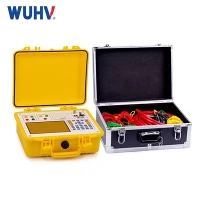


Let's dive deeper into the 80kV VLF Tester in terms of its design, testing methodology, detailed applications, technical specifications, and operation steps.
1. Detailed Purpose of the 80kV VLF Tester
The 80kV VLF Tester is primarily used for testing the insulation resistance and dielectric strength of cables, equipment, and systems designed for high-voltage operations. Given that electrical cables, transformers, and other high-voltage components are subject to significant stress during their operational life, it's essential to ensure that their insulation remains intact and free from defects. Here are the specific purposes it serves in more detail:
Dielectric Testing of High-Voltage Insulation: It applies an AC voltage at a low frequency (usually 0.1 Hz) to evaluate the dielectric strength and insulation integrity of cables, which is critical for maintaining system reliability.
Leakage Current Monitoring:
The tester tracks the leakage current during the test, which should remain within a safe threshold. If it exceeds this, it indicates potential insulation breakdown or weaknesses.
Insulation Defect Detection:
Tests can detect weak spots in the insulation, such as moisture ingress, partial discharge, or degradation that could lead to faults over time.
Performance Assessment for Aging Equipment:
For cables or systems that have been in service for several years, an 80kV VLF Tester helps to assess the current state of the insulation to prevent unexpected failures.
Power System Reliability and Risk Mitigation:
Helps to prevent system downtimes by identifying and addressing insulation issues before they cause significant damage to the electrical infrastructure.
2. How the 80kV VLF Tester Works
The 80kV VLF Tester works by applying a Very Low Frequency (VLF) AC voltage, usually around 0.1 Hz, to the insulation of cables or electrical equipment. Here's how it functions in more detail:
Step 1: Generation of Low-Frequency Voltage
The VLF AC Hipot Tester generates a low-frequency (0.1 Hz) voltage. Unlike traditional 50/60 Hz AC testing, the lower frequency results in less stress on the cable's insulation. The frequency typically used in VLF testing ensures that the cable insulation is subjected to prolonged stress without overheating, which would be a concern if higher frequencies were used.
Step 2: Application of Voltage
The tester applies the AC voltage (ranging from 1.5 to 2 times the cable's rated voltage) to the system under test. The high-voltage test simulates the normal operational conditions of the cable and stresses the insulation to identify weak points.
Step 3: Leakage Current Monitoring
As the voltage is applied, the tester monitors the leakage current through the cable insulation. The current is an indicator of the cable's condition:
Low Leakage Current: Indicates healthy insulation and no breakdown.
High Leakage Current: Signals potential insulation defects, degradation, or moisture within the cable, which could lead to eventual failure.
Step 4: Test Duration
The tester typically runs the test for 5 to 10 minutes to simulate long-term operational conditions. The duration is long enough to detect any issues but not so long as to overheat or damage the insulation.
Step 5: Discharge and Safe Removal
After the test, the voltage is slowly reduced to avoid any sudden discharge. The cable is then discharged to a safe voltage level before any handling takes place.
3. Key Features of the 80kV VLF Tester
Here are the key features of the 80kV VLF Tester:
High Voltage Output: Capable of providing up to 80 kV AC voltage to perform stress tests on high-voltage cables and equipment.
Very Low Frequency (0.1 Hz): Operates at a low frequency to reduce the risk of insulation damage and allows for more accurate testing of cables that might be vulnerable to higher frequencies.
Leakage Current Measurement: Monitors the leakage current during the test and provides real-time feedback on the condition of the insulation.
Portability: Typically, these testers are designed to be lightweight and portable, making them ideal for on-site testing in remote locations or difficult-to-reach areas.
User Interface and Display: Equipped with digital displays that show test parameters, leakage current, and voltage applied to the cable, allowing for easy monitoring of the test in progress.
Safety Features: Built-in safety interlocks and alarms to prevent dangerous situations such as high leakage or failure of the test procedure.
Data Logging and Reporting: Some advanced models allow for data logging, which records results and test parameters for further analysis or documentation, often in compliance with industry standards.
Adjustable Voltage: Users can set the test voltage to match the rated voltage of the cable under test (or up to 80 kV in this case).
4. Applications of an 80kV VLF Tester
The 80kV VLF Tester is widely used in various industries where high-voltage cables and equipment need to be tested for reliability and safety. Here are the most common applications:
Power Transmission and Distribution:
Medium and High-Voltage Cables: 80kV VLF testers are perfect for testing medium to high-voltage underground cables used in power distribution systems. These cables are often difficult to test using standard AC methods, and VLF testing allows for safer, more accurate testing.
Substation Testing: High-voltage cables and equipment in substations (e.g., transformers, switchgear) are regularly tested for insulation integrity to avoid operational failures.
Cable Manufacturers:
Cable Insulation Testing: Manufacturers of high-voltage cables use VLF testers to ensure the quality and dielectric strength of the insulation during the production process.
Quality Assurance: Ensures that all cables leaving the factory meet industry standards for insulation performance.
Power Generation Plants:
Cabling in Power Stations: Testing the cabling in power plants, especially cables that connect generators and other high-voltage equipment, to ensure their insulation remains in optimal condition.
Renewable Energy Systems:
Wind and Solar Power: Wind turbines and solar power systems use long cables that need to be tested for insulation integrity. VLF testing ensures that these installations can safely handle high-voltage stresses without insulation breakdown.
Industrial Applications:
Mining and Heavy Industry: In mining operations, cables that supply power to critical machinery and equipment need to be tested for long-term reliability, especially since mining sites often use older and hard-to-reach cables.
Oil and Gas: In oil rigs and refineries, cables are subject to extreme environments. VLF testers help ensure that insulation remains intact and the equipment is safe.
Post-Installation and Maintenance:
Routine Maintenance: After installation or during regular maintenance intervals, VLF testing can be performed to confirm that no damage has occurred over time.
Post-Repair Testing: After repair or modification of high-voltage systems, the insulation integrity of cables is checked using the VLF tester to verify the effectiveness of repairs.
5. Test Steps Using the 80kV VLF Tester
Here are the detailed steps for performing a test with an 80kV VLF Tester:
Step 1: Preparation
Ensure Safety: Wear appropriate PPE (insulated gloves, face shields) and check the test area for any potential hazards.
Disconnect Equipment: Ensure the equipment or cables to be tested are disconnected from the power supply and any load.
Step 2: Setup the Tester
Connect the Tester Leads: Connect the high-voltage output lead to the conductor of the cable and the ground lead to the cable's shield or grounded part.
Set the Test Parameters: Set the test voltage (1.5-2 times the rated voltage of the cable) and test duration (usually 5–10 minutes) on the tester.
Step 3: Apply the Test Voltage
Start the Test: Begin applying the VLF AC voltage to the cable. The tester will gradually ramp up the voltage to the desired level.
Monitor Leakage Current: Watch the leakage current during the test. A sudden increase in current can indicate a fault in the insulation.
Step 4: Test Monitoring
Duration: Allow the test to run for the specified duration. The tester will monitor the leakage current and voltage during this time.
Observe Alarms: If any alarms or fault indicators appear, immediately stop the test and inspect the system.
Step 5: Test Completion
Slow Discharge: Once the test duration is completed, the tester will slowly discharge the applied voltage to avoid any sudden electrical surges.
Disconnect the Tester: Safely disconnect the leads once the voltage is fully discharged.
Step 6: Review Results
Record the Results: Document the test results, including the leakage current, applied voltage, and test duration. If the leakage current exceeds acceptable limits, further investigation or maintenance is needed.
6. Technical Specifications (Sample)
Here's a sample of the technical specifications for an 80kV VLF Tester:
Voltage Output: 0-80 kV AC (adjustable)
Frequency: 0.1 Hz (Very Low Frequency)
Leakage Current Measurement: 0-50 mA (typically monitored via an ammeter or digital display)
Test Time: Adjustable, typically 5-10 minutes
Display: Digital LCD with real-time voltage and leakage current readouts
Power Supply: Typically operates on single-phase AC input, ranging from 100V to 240V AC
Protection: Overload protection, ground fault protection, and safety interlocks
Weight: Around 15–30 kg, depending on model
Portability: Often comes with a carrying case or frame for transport to remote testing sites
If you are looking for 80kV VLF Tester manufacturers and suppliers, please feel free to contact us for high quality and googl price of the 80kV VLF Tester and a more detailed introduction. As an factory of 80kV VLF Tester, last 21years,we design, development, manufacturing and marketing in China, we have various types of 80kV VLF Tester for sales to solve your problems.