

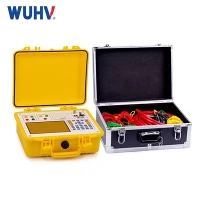


An Impulse Voltage Generator (IVG) is a device designed to generate high-voltage electrical impulses for testing the dielectric strength and insulation of electrical equipment and materials. These generators simulate lightning strikes, switching surges, and other transient voltage events that electrical systems might experience in real-world scenarios. Below are some frequently asked questions (FAQs) about Impulse Voltage Generators.
1. What is an Impulse Voltage Generator (IVG)?
An Impulse Voltage Generator (IVG) is a testing instrument used to apply high-voltage impulse waves to test the insulation capabilities of electrical equipment. The impulse voltage simulates natural phenomena like lightning strikes or switching transients that electrical components might be subjected to in real-world environments.
The impulse waveform is typically a non-sinusoidal voltage pulse, characterized by a fast rise time and long tail. It can be applied in different testing scenarios to assess equipment under transient electrical conditions.
2. What is the purpose of an Impulse Voltage Generator?
The main purposes of an Impulse Voltage Generator include:
Testing Dielectric Strength: To evaluate the insulation strength of electrical equipment (e.g., transformers, capacitors, switchgear) against high-voltage impulses.
Simulating Natural Events: To simulate transient voltage events like lightning strikes and switching surges in a controlled laboratory setting.
Quality Control: Manufacturers use IVGs to test the quality of materials and equipment used in high-voltage electrical systems.
Fault Diagnosis: To identify weaknesses in insulation, such as partial discharge, breakdowns, or moisture ingress that might not be visible under normal operating conditions.
Compliance with Standards: To ensure that electrical equipment meets the necessary international standards for withstand voltage and surge protection
3. How does an Impulse Voltage Generator work?
An Impulse Voltage Generator works by creating a high-voltage pulse or transient that mimics the characteristics of lightning or switching surges. The typical process involves the following steps:
1. Charging:
The generator uses a capacitor bank to charge up to a high voltage, typically in the range of 100 kV to 500 kV.
2. Discharge:
When the generator is triggered, the energy stored in the capacitors is rapidly discharged through a spark gap or thyratron switch, creating a high-voltage pulse. This pulse can be of different shapes, such as standard lightning impulse (1.2/50 µs) or switching impulse (250/2500 µs).
3. Output Waveform:
The voltage output is typically non-sinusoidal and characterized by a fast rise time and a long tail (the fall time). The duration of the impulse can vary, but it is typically very short (a few microseconds to milliseconds).
4. Testing:
The impulse voltage is applied to the equipment under test (EUT). The equipment is then monitored for any signs of breakdown, such as insulation failure, arcing, or other failures.
4. What are the key parameters of an Impulse Voltage Generator?
Key parameters of an Impulse Voltage Generator include:
Peak Voltage: The maximum voltage reached during the impulse, typically ranging from 100 kV to 500 kV depending on the test requirements.
Rise Time: The time it takes for the impulse to rise from 10% to 90% of its peak value, typically in the range of 1–10 µs.
Duration (or Tail Time): The time it takes for the impulse to fall from 90% to 50% of its peak value, typically in the range of 50–200 µs.
Impulse Shape: The standard lightning impulse waveform is 1.2/50 µs, where 1.2 µs is the rise time and 50 µs is the duration. The switching impulse is typically 250/2500 µs.
Energy Delivered: The total energy released by the impulse, which is important for evaluating the insulation's response to high-voltage surges.
5. What are the typical applications of an Impulse Voltage Generator?
Impulse Voltage Generators are used in a variety of applications, primarily for testing high-voltage electrical equipment. Some of the most common applications include:
1. High-Voltage Equipment Testing:
Transformers: To test the dielectric strength of transformers under simulated lightning and switching surges.
Circuit Breakers: Ensuring that circuit breakers can handle high-voltage impulses and switch properly under transient conditions.
Switchgear: Testing the insulation and switchgear performance under extreme voltage surges.
Cables: Testing the insulation of cables, especially for those used in high-voltage transmission and distribution systems.
2. Electrical Power Systems:
Substations: Testing components like bushings, insulators, and connectors for durability against impulse voltages.
Generators and Motors: Evaluating the ability of electrical machinery to withstand high-voltage impulses.
Protective Equipment: Testing the effectiveness of surge arresters, insulators, and other protection devices against voltage transients.
3. Research and Development:
Material Testing: Testing materials used in insulation systems, such as plastics, ceramics, and composites, to simulate extreme electrical conditions and determine their suitability for use in high-voltage environments.
Standards Compliance: Manufacturers use impulse generators to ensure that their products meet the necessary international standards .
6. What types of impulse waveforms are commonly used?
Impulse voltage generators can generate different waveform shapes depending on the application:
Standard Lightning Impulse: Typically a 1.2/50 µs waveform, where:
1.2 µs is the rise time (the time to go from 10% to 90% of peak value),
50 µs is the duration (the time to decay from 90% to 50% of peak value).
This waveform is commonly used for testing the dielectric strength of electrical equipment under lightning surge conditions.
Switching Impulse: Typically a 250/2500 µs waveform, where:
250 µs is the rise time,
2500 µs is the duration.
This waveform is used to simulate voltage transients that occur when switching high-voltage equipment on or off.
7. What are the common standards for impulse testing?
There are several international standards that define impulse voltage testing procedures, including:
IEC 60060-1: General definitions and test procedures for impulse voltage.
IEC 60060-2: High-voltage testing techniques, including impulse testing.
IEEE C62.41: Surge testing for electrical equipment in power systems.
ANSI C37.90: Standards for testing surge protection and high-voltage equipment for switching transients.
These standards define the waveforms, testing voltages, and test setups that should be used when performing impulse voltage tests.
8. How is the impulse waveform generated and controlled?
The waveform is typically generated using a capacitor-based circuit:
Charging Stage: The capacitors are charged up to the desired voltage level.
Discharge Stage: The voltage is rapidly discharged through a spark gap or solid-state switch. The time characteristics of the discharge (rise time and tail time) are determined by the capacitance, resistance, and inductance in the circuit.
The waveform is controlled and shaped through the design of the capacitor bank, the switching mechanism, and the discharge circuit.
9. What is the difference between an Impulse Voltage Generator and a traditional AC High-Voltage Tester?
Waveform Type: The key difference is that an Impulse Voltage Generator applies a non-sinusoidal impulse waveform (often with very steep rise times and long tails), while a traditional AC high-voltage tester applies a sinusoidal AC voltage.
Purpose: The IVG is used to simulate transient voltage events like lightning strikes and switching surges, whereas an AC tester is used to assess the dielectric strength of equipment under continuous AC stress.
Frequency: An IVG operates at a very low frequency or essentially no frequency (impulse), while an AC tester operates at the line frequency (50/60 Hz).
10. What safety precautions should be taken when using an Impulse Voltage Generator?
Due to the extremely high voltages generated by impulse voltage testers, safety is paramount:
Personnel Protection: Always wear appropriate PPE, such as insulated gloves, safety goggles, and arc flash suits.
Test Area: Ensure the test area is well-marked and that unauthorized personnel are kept at a safe distance.
Interlock Systems: Use testers with built-in safety interlocks that prevent accidental activation and reduce the risk of high-voltage exposure.
Proper Grounding: Ensure the equipment is properly grounded and that safety circuits (e.g., crowbar protection and short-circuit protection) are in place.
Test Equipment: Use equipment that has undergone regular calibration and maintenance to ensure accurate and safe operation.
If you are looking for Impluse Voltage Generator manufacturers and suppliers, please feel free to contact us for high quality and googl price of the Impluse Voltage Generator and a more detailed introduction. As an factory of Impluse Voltage Generator, last 21years,we design, development, manufacturing and marketing in China, we have various types of Impluse Voltage Generator for sales to solve your problems.