


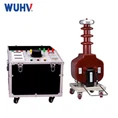
A PD-Free AC Series Resonant Test System is an advanced high-voltage testing system designed for testing electrical insulation using AC (alternating current) voltage with a series resonant circuit, while minimizing the effects of Partial Discharge (PD) during testing. Partial discharge is a phenomenon that occurs when there are small localized electrical discharges within the insulation, which can be detrimental to the longevity and performance of electrical equipment. PD-free systems are designed to eliminate or greatly reduce this issue, ensuring more accurate and reliable insulation testing.
Here's a comprehensive guide to understanding, setting up, and using a PD-Free AC Series Resonant Test System.
1. What is a PD-Free AC Series Resonant Test System?
A PD-Free AC Series Resonant Test System is a high-voltage testing system used to assess the integrity of electrical insulation by applying high-frequency AC voltage. The system is specifically designed to reduce or eliminate partial discharge (PD), which can interfere with accurate test results, especially in high-voltage equipment like transformers, cables, and switchgear.
In a series resonant circuit, an inductor and a capacitor are connected in series, and the resonant frequency of the circuit is adjusted to match the system's requirements. The goal is to apply the highest possible test voltage to the equipment under test (EUT) while minimizing the risk of PD occurring in the test setup.
2. Key Components of the PD-Free AC Series Resonant Test System
The system consists of several critical components that work together to perform the high-voltage AC test while minimizing PD effects:
a. High-Frequency AC Power Source
Purpose: Generates the input AC voltage at a high frequency (usually in the range of 10 Hz to 200 Hz) that is required to achieve resonance in the circuit.
Design: Often uses an inverter or transformer to generate the required voltage, which can be precisely controlled.
b. Series Resonant Circuit (Inductor + Capacitor)
Purpose: This is the heart of the system, where the inductor and capacitor are tuned to achieve resonance. The series resonant circuit allows high voltages to be generated with minimal current draw.
Inductor: Provides inductance that, in combination with the capacitance, forms the resonant circuit.
Capacitor: Stores and releases electrical energy, amplifying the voltage across the equipment under test.
c. PD-Free Design Features
Capacitive Voltage Divider: Reduces PD effects by balancing the voltage distribution across the circuit, ensuring uniform stress on the insulation under test.
Insulation and Filtering: Designed with high-quality insulation and filtering elements that reduce electrical noise, minimizing partial discharges.
Advanced Monitoring System: Equipped with advanced monitoring and control systems to continuously detect PD activity. The system can automatically adjust parameters to suppress PD during testing.
d. Output Transformer
Purpose: Steps up the voltage produced by the resonant circuit to the required test voltage level (e.g., 100 kV, 200 kV, or higher).
e. Control and Measurement System
Purpose: Monitors voltage, current, and partial discharge levels during the test and provides real-time feedback.
Features: Often includes a touch-screen interface for easy control and adjustments, with advanced diagnostic tools to analyze test data.
f. High Voltage Terminals
Purpose: These are the output terminals that are connected to the equipment under test (EUT). They are designed to withstand high-voltage stress while ensuring safe testing.
3. How Does a PD-Free AC Series Resonant Test System Work?
Resonance Setup:
The system begins by applying a low-frequency AC voltage to the resonant circuit (involving the capacitor and inductor).
As the frequency is adjusted, the system reaches the resonant frequency, where the impedance of the inductor and capacitor are perfectly matched, allowing for efficient high-voltage generation.
High Voltage Generation:
Once the resonant frequency is reached, the system amplifies the voltage through the output transformer, generating the required test voltage for the equipment under test (EUT).
Partial Discharge (PD) Monitoring and Suppression:
During testing, the PD-free design continuously monitors the insulation for signs of partial discharges. If PD is detected, the system can automatically adjust its parameters, such as frequency or voltage, to suppress any unwanted discharges.
Applying Voltage to EUT:
The high-voltage AC is applied to the EUT, which could be a transformer, cable, switchgear, or another electrical component.
Test Monitoring and Feedback:
The system continuously monitors the EUT for leakage currents, PD activity, and insulation breakdown, ensuring safe and reliable testing.
Data Analysis:
After the test, data from the monitoring system is analyzed, providing insights into the insulation's performance and whether the equipment meets the required standards.
4. Advantages of PD-Free AC Series Resonant Test Systems
High Voltage with Low Power: The resonant circuit allows for the generation of high voltages using relatively low power input, making it energy-efficient.
Reduced Risk of PD: The PD-free design significantly minimizes partial discharge, ensuring more accurate and reliable test results.
Realistic Operating Conditions: The system applies AC voltage similar to the operational voltage in real-world conditions, providing a more accurate test of insulation performance.
Portable and Compact: Compared to traditional high-voltage test systems, AC series resonant test systems are more compact and easier to transport.
Precise Control: The ability to fine-tune the frequency and voltage settings allows for precise and controlled testing, which is essential when testing sensitive equipment.
5. Applications of PD-Free AC Series Resonant Test Systems
These systems are primarily used for testing the insulation of high-voltage electrical equipment. Common applications include:
Power Transformers: To verify the quality of insulation and ensure that transformers can handle their rated operating voltage without breakdown.
High-Voltage Cables: To test the dielectric strength of cables, ensuring that they can safely carry the required voltage.
Switchgear: Used for testing circuit breakers, disconnectors, and other high-voltage switchgear.
Substations: Ensures the insulation of equipment such as bushings, surge arresters, and other critical components.
Generators and Motors: To test the insulation of motor windings and generator coils.
Capacitors: To ensure the insulation of high-voltage capacitors meets operational standards.
6. Test Procedure for PD-Free AC Series Resonant Test System
System Preparation:
Ensure the PD-free AC resonant test system is calibrated and ready for operation.
Verify that the equipment under test (EUT) is correctly isolated, grounded, and connected to the test system.
Frequency and Voltage Setup:
Set the desired test frequency and voltage for the EUT based on manufacturer specifications or industry standards.
Adjust the resonant frequency until the system is in resonance, ensuring efficient high-voltage generation.
Test Execution:
Gradually increase the test voltage while monitoring the PD levels, voltage, and leakage currents.
Allow the system to apply the test voltage for the required duration (usually 5–15 minutes).
Monitoring and Feedback:
Continuously monitor the insulation condition and PD activity during the test. The system may automatically adjust settings to suppress PD if detected.
Post-Test Analysis:
Once the test is completed, reduce the voltage and disconnect the system from the EUT.
Analyze the data and check the test results to ensure the insulation passed the test criteria (e.g., no significant PD or breakdown).
Inspection:
Inspect the EUT for signs of damage, such as insulation breakdown or visible discharge traces.
7. Key Considerations and Best Practices
Safety First: Always follow proper safety protocols when dealing with high-voltage equipment. Ensure grounding and isolation of the test equipment to prevent electrical hazards.
Regular Maintenance: Ensure the PD-free AC series resonant test system is maintained regularly to ensure reliable performance and accurate testing.
Calibrate Before Use: Always calibrate the system before each test to ensure correct voltage, frequency, and resonance parameters.
Proper Setup: Make sure the EUT is correctly connected and isolated from the power grid to prevent electrical interference during the test.
8. Conclusion
A PD-Free AC Series Resonant Test System provides a reliable and efficient way to test the insulation of high-voltage electrical components, ensuring their performance and longevity. By minimizing partial discharges and applying realistic operating voltages, it ensures that electrical equipment meets safety standards and can withstand real-world operational conditions. Regular maintenance and proper usage ensure that the system provides accurate, safe, and reliable test results.
If you are looking for PD Free AC Series Resonant Test System manufacturers and suppliers, please feel free to contact us for high quality and googl price of the PD Free AC Series Resonant Test System and a more detailed introduction. As an enterprise of PD Free AC Series Resonant Test System, last 21years,we design, development, manufacturing and marketing in China, we have various types of High Voltage Tester for sales to solve your problems.