


PD detector
21 years professional manufacturer and supplier in china, standardized factory, best product quality, and cheap wholesale prices!!!
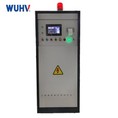
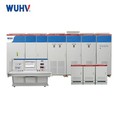
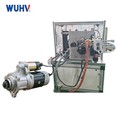
The PD detector is an on-line partial discharge (PD) spot tester for HV assets. The instrument detects TEV signals generated by internal discharge in Air Insulated Switchgear (AIS), acoustic discharge generated by surface tracking or corona, high-frequency signal generated by cable partial discharge, and ultra-high frequency signal generated by internal discharge in Gas Insulated Switchgear (GIS). A mobile device receives data directly from the instrument for display and synchronisation with a central server.
Early Detection Of Electrical Faults
PD detection, when compared with the conventional method, helps identify minor changes in the electrical switchgear at the earliest. This helps in implementing mitigation strategies to avert catastrophic failures, which lead to occupation hazards, downtime, and financial losses.
Cost-effectiveness
Inspection of electrical equipment using PD detectors helps save money in two ways. To begin with, by using pd detectors, more equipment can be inspected efficiently and precisely on time. Secondly, this assessment helps in addressing the issues promptly, which helps reduce the overall expenses associated with them.
Enhanced Safety
PD detector helps electrical engineers and inspectors examine high-voltage electrical equipment without close contact. Unlike the conventional approach, this greatly reduces the risk of accidents and shocks.
Precision And Efficiency
PD detection is done with the help of sensors and software, which offer a high degree of precision in detecting and locating dim-outs/outages/discharges or failures, eliminating ambiguity associated with the conventional approach, which enables maintenance personnel to effectively address the identified problems.
Versatility And Broad Range Of Applications
The application of PD detection comes in handy to diverse fields such as power-generation industries, manufacturing, and transportation & utilities industries etc. Furthermore, PD detector can be implemented on a wide range of electrical equipment, including motors, switchgear, cables, and transformers. All these make pd detection an indispensable part of electrical maintenance and asset longevity.


Why Choose Us
Our factory
We are a professional OEM manufacturer engaged in the R&D, sales and service of high voltage test equipment.We have the right to import and export by ourselves.
Customized services
We listen to our clients objectives and aspirations and therefore provide customize solutions.
Quality control
Our experienced staff is committed to strict quality control and thoughtful customer service and is always available to discuss your requirements and ensure full customer satisfaction.
Wide application of products
We have production lines of more than 108 different products in the field of high-voltage testing, and they are widely used in power energy, transportation, metallurgy, chemical industry, mining and water conservancy projects.
Types of PD detector
The 3 main types of Partial Discharge
Internal Partial Discharge - The silent killer
Internal PD occurs within the insulation material itself, often without any external warning signs like sound, smell, or visual cues. This makes it particularly dangerous, as it can be the root cause of unexpected equipment failures. Regular asset condition assessment is essential to detect internal PD before it leads to severe consequences.
Surface Partial Discharge - A more visible concern
Surface PD occurs on the surface of insulation and can often be seen with the naked eye, especially under certain environmental conditions like high humidity. While it is easier to detect through visual inspection, early detection is still crucial to prevent further deterioration. Regular testing helps in identifying surface PD before it causes significant damage.
Corona Partial Discharge - A Precursor to Surface PD
Corona PD is typically heard as a buzzing sound in outdoor switchyards. While it is generally less harmful in outdoor environments, if left unchecked, it can initiate surface PD in enclosed spaces. Continuous testing for partial discharge is key to monitoring and mitigating corona PD risks.
Analyzing Switchgear
PD detectors can be used to analyze high-voltage (HV) and medium-voltage (MV) switchgear.
Detecting Insulation Issues
PD detectors can help identify insulation problems in transformers, cables, and substations before they lead to catastrophic failures.
Preventing Forest Fires
PD detectors can be used to detect partial discharges from covered conductors on high-voltage power lines in forested areas. This can help prevent forest fires and other disasters caused by contact between the conductors and vegetation.
Optimizing Maintenance
PD detectors can provide information about the condition of insulation systems, which can help optimize maintenance activities.
Extending Transformer Lifespan
PD detectors can help extend the lifespan of transformers by detecting and addressing insulation issues early.

Detection methods of partial discharges
Acoustic Detection
The DP can be accompanied by sound generation. The acoustic wave is due to the expansion of gases near the discharge. This acoustic signal can be detected by piezoelectric transducers. The main frequency used for acoustic detection ranges from 20 kHz to 100 kHz.
Electrical Detection
If a partial discharge occurs in the phase-to-ground isolation of an element of the high-voltage plant, such as a metal-clad cabinet, a small amount of electrical charge is transferred from the high-voltage conductor to the grounded metal cladding. .
Because this cabinet is grounded with a wire, it is possible to measure the current that passes through that wire with a high frequency current transformer (HFCT) which is an inductive coupling sensor.
Transient earth voltages (TEV) are voltage spikes induced on the surface of the surrounding metal work. The TEV occurs because the partial discharge creates current peaks in the conductor and a small amount of this energy is transferred to the metallic liner connected to the ground.
Detection of the EMI Method
The partial discharge will emit electromagnetic waves. EMI can be captured by antenna and converted, in function of its power, in dB.
Chemical Detection
This method is used in transformers through the analysis of dissolved gases (DGA). The method is also applicable in the Isolated Gas Substation (GIS) where the analysis and detection of SF6 gas components can be used.
How to ensure the safety of PD detector?
The voltage at the test site of the PD detector is as high as tens of thousands of volts, so the relevant testers must strictly abide by various safety precautions. Make sure there are clear warning signs in the test area so anyone on site knows where the high voltage area is. No one is allowed to enter the high voltage area during the test.
Whether it is the operation or regular maintenance of the PD detector, it must be a competent professional, and other people who do not understand the PD detector must never touch the instrument. This is not only for the service life of the instrument, but also to ensure the personal safety of everyone.
Before using the PD detector to test, the user should master the test method, test procedure and test purpose and keep it in mind, which is very important for the test.
The place where the PD detector is tested must be kept clean and tidy, and no other items unrelated to the test shall be stored. In particular, there must be no metal fragments on the ground in high pressure areas.
The surface of the test object, step-up transformer and coupling capacitor should be kept dry and clean. If there is moisture or dirt on the surface, it is easy to cause partial discharge, resulting in abnormal measurement. The most important thing is to make the PD detector detector play a greater role in the test and make the whole measurement process smoother.
The test site voltage of the PD detector is as high as tens of thousands of volts, and the test personnel should strictly abide by all safety precautions. There should be obvious and clear warning signs in the test area, and everyone on site should be aware of the high-voltage area. Direct test personnel should understand all live components and high-voltage components in the measurement circuit, and those who do not directly test should be isolated outside the test area. During the test and after power-on, no one is allowed to enter the high-voltage area.
The test site should be tidy and clean, and other irrelevant items should not be stored. There should be no messy small metal pieces (such as bare copper wire segments, screws, nuts and other small metal pieces) on the ground in the high-voltage range. The tested product, step-up transformer, coupling capacitor, etc. should be kept at a proper distance from the surroundings.
The surface of the test product, step-up transformer, coupling capacitor, etc. should be kept dry and clean, because moisture and dirt on the surface will cause partial discharge on the surface and cause abnormal measurement.
The test operator should master the test circuit, test method, test procedure and test purpose. Before starting the test, connect the lines according to the regulations. Various metal objects in the test area should be firmly grounded, and then check and improve all possible discharge parts in the test area (if there are no sharp or acute angles), pay special attention to the grounding line , Whether the wires of high-voltage lines and strong current circuits are firmly connected.
Avoid exposing the connecting wires to prevent corona discharge, especially for partial discharge tests with higher voltage levels. If necessary, thicken the high-voltage connecting wires and install an anti-corona cover to reduce the excessive field strength. Caused by corona discharge. The shielding cover should not be in contact with the porcelain skirt of the test product.
Under normal circumstances, during the test, the partial discharge of the test product during the withstand voltage and pre-boost is much larger than the normal value. At this time, the instrument will inevitably exceed the full scale. In order to prevent damage to the instrument, the coarse gain adjustment knob of the instrument should be turned counterclockwise by one or more steps, and the standard is not to exceed the full scale. When the voltage drops to the measured voltage, turn the coarse gain adjustment switch clockwise by one or more gears to record the measured value.
When the test is abnormal, the power supply should be cut off before further processing.
Our Factory
21 years professional manufacturer and supplier in china, standardized factory, best product quality, and cheap wholesale prices!!!
Wuhan UHV Power Technology Co.,Ltd. established in 2021, located in Wuhan East Lake New Technology Development Zone and have convenient transportation access. We are professional OEM Manufacturer which is engaged in the research, development, sale and service of High Voltage Testing Equipment including: Resonant Test System, High Voltage Tester,Transformer Tester,Circuit Beaker Tester, Relay Protection Tester, Cable Tester, Oil Tester, DC Battery Tester, Generator Tester, Insulation Resistance Tester, Power Metering Products etc.They are widely applied in power engineering project, transportation,petrochemical industry,mining and water conservancy project. In addition, We have obtained CE, ISO9001 & other certificates. Our products are not only selling well in mainland China, but also exported to the countries around the world including Malaysia, Indonesia, Vietnam, Philippines, Saudi Arabia, The United Arab Emirates,America, Australia, Argentina,Chile, Brazil etc. We are highly trusted and praised by clients in competitive products and strong technique support.
If you have any requirements, pls feel free to contact us, and we will always right be here ready to serve for you. Our slogan: Smart Electric Testing Equipment Manufacturer, making your testing work more easy.


Our Certificates

FAQ
As one of the leading pd detector manufacturers and suppliers in China, we warmly welcome you to buy high-grade pd detector made in China here from our factory. For price consultation, contact us.