

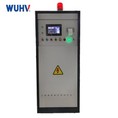

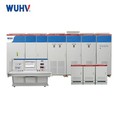
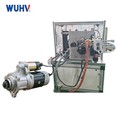
Relay Protection Tester
Relay Protection Tester is primarily used for the protection, detection, and maintenance of power systems. Its main goal is to detect abnormal conditions (such as overcurrent, undercurrent, overvoltage, undervoltage, or faults) and initiate appropriate actions, such as tripping circuit breakers, to protect equipment and ensure system reliability. It is a crucial testing tool to guarantee the safe and reliable operation of power systems.
Why Choose Us?
Our company has been specializing in the production and manufacturing of frequency series resonance devices for 21 years, with a modern intelligent factory covering over 40,000 square meters and more than 100 automated production, manufacturing, assembly, and testing equipment. We have obtained CE certification and currently serve over 20,000 customers worldwide.
Quotation within 1 hour – Solution within 24 hours - Product demonstration available - Strict contract performance
On-time delivery - 12-month warranty – Optional extended warranty - Factory acceptance testing
Authorized calibration (optional) - Worldwide training support – Regular follow-up visits


Why Do We Need a Relay Protection Tester?
The relay protection tester helps simulate real fault conditions and verifies the correct operation of the protection system. It ensures that relays respond to faults as expected and can be used for the daily maintenance and troubleshooting of protective equipment. Testers typically offer the following assistance:
Simulate fault conditions: The tester generates faults (such as overcurrent, undervoltage, etc.) to check whether the relay correctly identifies and operates accordingly.
Set calibration and adjustment: The tester allows users to set and verify the calibration and settings of protective relays to ensure they align with the required protection parameters.
Test relay response: It simulates real-world fault scenarios to verify the response of the relay, ensuring it trips the circuit breaker or issues an alarm as designed.
Verify coordination: The relay tester is also used to check the coordination between multiple relays in the protection scheme. Proper coordination ensures that the correct relays operate during faults, minimizing damage to equipment.
Our Product Features
1.Flexible voltage and current output combinations: The model features standard 4-phase voltage and 3-phase current output, which can be easily combined for various protection tests. Each phase voltage can output 120V, and the current of three phases can output 120A. The fourth phase voltage, Ux, is a multifunctional voltage item that can be set to four types of 3U0, detect synchronous voltage, or output under any voltage value.
2.Easy standalone operation: The device panel is equipped with a trackball mouse, optimized keyboard, and a large TFT LCD display. It uses a built-in Chinese Windows platform operating system. It is ready to use immediately upon startup and is easy and fast to operate.
Dual operation mode: In addition to standalone operation, the device can also be connected to an external laptop or desktop computer for operation. The functions in both modes are identical, providing complete flexibility.
3.High-fidelity linear amplifier: The device uses high-fidelity, high-reliability modular linear amplifiers (not switch-type amplifiers), ensuring excellent performance. It does not cause high or medium frequency interference at the test site, guaranteeing smooth waveform accuracy from high to low currents.
4.High-performance host: The output part is controlled by a DSP, offering fast computing speed, strong real-time digital signal processing capabilities, wide transmission bandwidth, and high-resolution D/A conversion control. The output waveform has high accuracy, low distortion, and excellent linearity. Using advanced technology and precision components, the device is compact, lightweight, fully functional, and easy to carry. It is ready to use immediately upon startup, and flow testing is also convenient.
5.Powerful software features: The software can complete complex verification tasks with high levels of automation. It allows easy testing and scanning of protection settings, fault replay, real-time storage of test data, vector graphic displays, online report printing, and more.
6.Dedicated DC power output: The device is equipped with one 110V and 220V adjustable DC power output.
Complete interface: The device features a built-in keyboard and mouse, allowing for both independent and external operation via a keyboard and mouse interface. It also has two USB ports and an RS232 port for communication with computers and other external devices.
7.Perfect self-protection function: The device is designed with a reliable heat dissipation structure, complete hardware protection measures, a power soft start function, software self-diagnosis of faults, and an output locking function.
Focused on Relay Protection Tester manufacturing for 21 years, a professional supplier in China, offering factory prices!
Key Components of a Relay Protection Tester
Power Supply: Provides the necessary electrical input (AC or DC) for testing relays. This is usually a variable output power supply that can be adjusted to simulate different fault conditions.
Current and Voltage Injection: To simulate faults, the tester can inject precise levels of current or voltage into the relay input.
Communication Interface: Some testers support communication protocols such as IEC 61850 and Modbus, allowing integration with more complex protection and automation systems.
Control Panel/Display: A user interface used to control the testing process, adjust settings, and display test results.
Test Leads and Connectors: Used to connect the tester to relays and other components in the protection system.
Relay Protection Test Types
Overcurrent and Undercurrent Tests: These tests simulate faults where the current exceeds or falls below a specified threshold. The relay must trip the circuit breaker or initiate control actions in response to these situations.
Overvoltage and Undervoltage Testing: Similar to current testing, but focused on voltage levels. The tester ensures that the relay detects abnormal voltage conditions and responds appropriately.
Distance Protection Tests: These tests simulate faults in distance protection relays at different distances, allowing users to check the relay's operation within the designated protection area.
Differential Protection Test: Mainly used for transformer or generator protection, this test checks whether the relay correctly detects the difference between input and output currents and trips in the event of a fault.
Time-Current Characteristic Test: This test helps evaluate the time-current curve of the protective relay, ensuring that the relay responds at the correct time according to its settings (e.g., the inverse time curve for overcurrent protection).
Relay Coordination Test: Ensures that multiple relays (such as those in different parts of the system) coordinate properly. One relay should trip to isolate the fault, while others remain inactive.
Different Applications of Relay Protection Testers
Power Plants and Substations
In power plants and substations, protective relays safeguard key equipment such as generators, transformers, circuit breakers, and busbars from faults. These systems operate at high voltage and current, making reliable protection essential to avoid costly damage or system failures.
Key Applications:
Generator Protection: Relays protect generators from overloads, underloads, and faults such as short circuits or ground faults. The relay protection tester ensures that these relays will trip in the event of a system failure.
Transformer Protection: Transformers are vulnerable to overcurrent, overvoltage, and thermal overloads. The tester verifies that differential protection (detecting differences between primary and secondary currents) and other relay functions work correctly to prevent damage.
Busbar Protection: Busbars distribute power across different parts of the factory or power grid, requiring protection from faults such as short circuits. The tester checks whether the busbar protection relay responds appropriately.
Circuit Breaker Test: Ensures that the circuit breaker opens quickly when the relay detects a fault, preventing fault propagation.
Instructions for Using a Relay Tester:
Simulate faults: Testers simulate overcurrent, undervoltage, and other fault conditions to verify whether the relay operates correctly.
Coordinated protection system: Relay testers check if multiple relays in a substation or plant work together as intended, isolating only the affected part of the system during a fault.
System reliability: Regular testing ensures the protection system is in good condition and will perform as expected in case of a malfunction.
Industrial Applications
In industrial environments, relay protection systems are essential for protecting equipment such as motors, generators, transformers, and circuit breakers from faults like overcurrent, undercurrent, and short circuits. Malfunctions in these settings can cause extensive shutdowns, expensive repairs, and safety risks.
Key Applications:
Motor Protection: Relays protect motors from overloads, phase failure, and rotor locking. Testers ensure that these relays trip as needed to prevent motor damage.
Transformer Protection: Industrial plants often use large transformers. Overcurrent, differential, and thermal protection relays are vital for protecting transformers under fault conditions.
Feedline Protection: Feeders distribute power within industrial facilities. The relay tester ensures the feeder protection relay responds quickly and correctly to faults.
Switchgear Protection: Protects circuits from overloads and short circuits. Relay testers verify that switchgear protection relays will isolate faults effectively.
Instructions for Using a Relay Tester:
Comprehensive testing: Testers evaluate a variety of relays, including those for overcurrent, undervoltage, and phase imbalance.
Daily maintenance: Testers verify that protective systems maintain functionality during aging and wear.
Safety compliance: Relay testers ensure that protection systems meet safety standards to prevent accidents.
Distribution Network
In distribution networks, protective relays ensure a continuous electricity supply while preventing faults from affecting most of the power grid. These networks consist of high-voltage transmission lines and medium to low-voltage distribution systems, which need to be constantly monitored for faults.
Key Applications:
Feedline Protection: Protects relays that safeguard feeders from faults such as short circuits and overloads. If part of the network fails, the relay ensures only the affected part is isolated, while the rest of the grid remains unaffected.
Transmission Line Protection: Transmission lines, especially those that span long distances, are vulnerable to weather conditions, animal interference, and human errors. The protective relay is set to trip in the event of line grounding, phase-to-phase faults, or wire breakages.
Transformer Protection: Distribution transformers, which step down high voltage for residential and commercial use, require protection against faults, overcurrent, and insulation failures. Relays must be tested to ensure protection against these potential failures.
Substation Protection: Distribution substations, which convert high-voltage electricity into lower voltages, rely on relays to protect equipment such as transformers, busbars, and circuit breakers from faults, ensuring that power is continuously supplied.
Instructions for Using a Relay Tester:
Network protection verification: The relay tester ensures that the entire distribution network's protection system is functioning correctly. This includes confirming that relays protecting feeders, transmission lines, and transformers can operate during fault conditions.
Coordination and sensitivity testing: Relay testers verify that the relays operate in the correct sequence and with proper sensitivity. This is critical in systems with multiple relays, where precise coordination can minimize service disruptions.
Relay timing and accuracy: The protection system must clear faults within a specific time to prevent further network damage. The relay tester ensures that the relay responds within the required time frame, minimizing system interference.
Debugging New Protection Systems
When installing a new electrical system or upgrading an existing one, a relay protection tester is used to debug the new protection relays and ensure that the entire protection system functions properly before it is commissioned.
Key Applications:
Initial Testing: Before activating a new protection system, the tester simulates fault conditions to ensure the relay responds correctly to abnormal situations.
Setting Verification: The relay tester helps verify that all protection settings (such as current thresholds, voltage limits, time delays, and coordination parameters) are correctly configured for specific applications.
System Integration: In many cases, new protection systems need to integrate with existing infrastructure. The relay tester ensures that all components work together seamlessly to guarantee synchronization within the protection network.
Instructions for Using a Relay Tester:
Simulate faults during debugging: During the debugging phase, the tester simulates real-world fault conditions to confirm the protection system's response.
Factory Acceptance Test (FAT): Before on-site installation, a relay tester can be used to perform a FAT to confirm that the relay operates according to its specifications.
System Integrity: The tester verifies that the relay is properly coordinated with other protection system components to ensure there are no gaps or overlaps in the protection coverage.
Daily Maintenance and Troubleshooting
Protective relays can degrade over time due to aging, wear, or environmental factors. Relay protection testers play a vital role in regular maintenance and troubleshooting to ensure continuous system reliability.
Key Applications:
Regular Testing: Periodic testing ensures that the relay continues to function properly throughout its lifespan. Routine testing helps identify potential problems early, preventing unexpected failures.
Troubleshooting Faulty Relays: If there is a problem with the protection system, the relay protection tester can pinpoint faulty relays, misconfigurations, or coordination errors.
Updating Protection Settings: Sometimes, relay settings need to be adjusted due to changes in network configuration or operating conditions. Testers verify that the updated settings work correctly.
Instructions for Using a Relay Tester:
Testing protection systems in various fault conditions: Routine maintenance involves testing relays under a range of fault scenarios, such as overloads, short circuits, and voltage imbalances.
Identify and Correct Faults: Relay testers help accurately diagnose faulty relays, enabling technicians to replace or recalibrate them to restore normal operation.
Focused on Relay Protection Tester manufacturing for 21 years, a professional supplier in China, offering factory prices!
As one of the leading relay protection tester manufacturers and suppliers in China, we warmly welcome you to buy high-grade relay protection tester made in China here from our factory. For price consultation, contact us.