

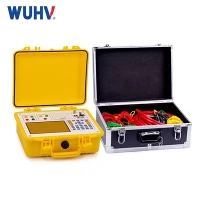


1. What is an Automatic Kinematic Viscosimeter?
An automatic kinematic viscosimeter is an instrument used to measure the kinematic viscosity of a liquid (usually oils or fuels) at a specified temperature, using a glass capillary viscometer and optical detection – fully controlled by an automatic system.
2. What is kinematic viscosity?
Kinematic viscosity is the ratio of a fluid's dynamic viscosity to its density. It describes a fluid's resistance to flow under gravity.

3. What is the principle of kinematic viscosity measurement?
A fixed volume of fluid flows through a capillary tube under gravity. The time it takes to pass between two marked points is measured. Viscosity is calculated based on that time and the tube's calibration constant.
4. How is an automatic viscosimeter different from a manual one?
| Feature | Manual Viscosimeter | Automatic Viscosimeter |
|---|---|---|
| Operation | Manual stopwatch & temp. control | Fully automated with sensors & controls |
| Accuracy | Operator dependent | High, repeatable accuracy |
| Throughput | Low | High (multi-sample capable) |
| Temperature control | Manual or external bath | Integrated Peltier/heating control |
| Data handling | Manual recording | Digital, with USB/PC interface |
5. Which test standards are supported?
| Standard | Description |
|---|---|
| ASTM D445 | Standard test method for kinematic viscosity |
| ISO 3104 | International equivalent of ASTM D445 |
| GB/T 265 | Chinese standard for viscosity |
6. What are typical applications of kinematic viscosity testing?
Transformer oil quality monitoring
Lubricant classification
Fuel oil specification
Hydraulic fluid performance
Polymer and additive behavior
7. What features do modern automatic kinematic viscosimeters include?
✅ Fully automated measurement cycle
✅ Dual or multi-bath operation (35°C, 40°C, 100°C, etc.)
✅ Optical or infrared bubble detection
✅ Self-cleaning and drying system
✅ High-precision temperature control (±0.01 °C)
✅ Data storage, export, and reporting
8. How is viscosity calculated in the system?
The system measures the flow time (t) and uses a calibration constant (K) of the capillary tube:

9. What are common viscosity test temperatures?
40°C – for lubricants
100°C – for high-temperature service oils
20°C / 25°C – for specialty fluids
Transformer oil: often tested at 40°C and 100°C
10. What maintenance does the system require?
Regular cleaning of viscometer tubes with solvent
Calibration with standard viscosity oils
Periodic check of bath temperature control
Optical sensor alignment check
11. Who are leading manufacturers of automatic kinematic viscosimeters?
If you are looking for automatic kinematic viscosimeters manufacturers and suppliers, please feel free to contact us for high quality and good price, we have various types of tester for sales to solve your problems.
Our company has been specializing in the production and manufacturing of frequency series resonance devices for 21 years. We operate a modern intelligent factory covering over 4000 square meters, equipped with more than 100 automated production, manufacturing, assembly, and testing machines. We have obtained CE certification and currently serve the over the word customers .
12. How is the system calibrated?
Using certified reference oils with known viscosity
Follow standard procedures per ASTM D445
Calibration is done automatically or semi-manually, depending on the model
13. What factors affect viscosity measurement accuracy?
| Factor | Impact |
|---|---|
| Temperature control | Major – ±0.01°C variation alters results |
| Cleanliness of tubes | Residue affects flow time |
| Sample homogeneity | Non-uniform oil skews reading |
| Calibration accuracy | Essential for correct value |
14. How many samples can be processed per day?
Depending on automation level:
Basic units: 10–30 samples/day
High-throughput models: 100+ samples/day with multi-bath, auto-sampler setup
15. What is the cleaning system like?
Integrated solvent injection and suction
Hot air or vacuum drying
Programmable rinse cycles for quick sample turnaround