

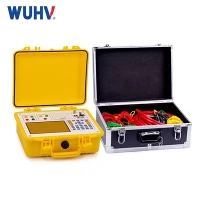


1. What is DGA (Dissolved Gas Analysis)?
DGA is a laboratory test used to analyze gases dissolved in transformer insulating oil to diagnose internal faults, such as overheating, arcing, or partial discharges.
2. Why is DGA important?
Detects incipient (early-stage) faults before catastrophic failure
Helps extend transformer lifetime and reliability
Enables condition-based maintenance
Identifies thermal and electrical stress inside the transformer
3. What gases are analyzed in DGA?
| Gas | Abbreviation | Common Cause |
|---|---|---|
| Hydrogen | H₂ | Partial discharges, arcing |
| Methane | CH₄ | Low-temperature overheating |
| Ethane | C₂H₆ | Overheating of oil |
| Ethylene | C₂H₄ | High-temperature oil breakdown |
| Acetylene | C₂H₂ | Arcing |
| Carbon Monoxide | CO | Paper insulation overheating |
| Carbon Dioxide | CO₂ | Paper degradation |
4. What are the main causes of gas generation in oil?
Electrical faults (e.g., partial discharges, sparking, arcing)
Thermal faults (e.g., hot spots, overheating)
Cellulose degradation (paper insulation aging)
Corona discharge and oil pyrolysis
5. What are the standard DGA interpretation methods?
| Method | Description |
|---|---|
| Key Gas Method | Links specific gases to specific fault types |
| Duval Triangle | Graphical tool using C₂H₂, C₂H₄, CH₄ to identify fault zones |
| Rogers Ratio Method | Uses ratios of key gases to identify fault categories |
| IEC 60599 Method | Standardized interpretation guidelines |
| IEEE C57.104 | Guidelines for acceptable gas limits and fault diagnostics |
6. What is the Duval Triangle?
A triangular diagram used to determine the fault type by plotting the relative percentages of three gases:
Methane (CH₄)
Ethylene (C₂H₄)
Acetylene (C₂H₂)
It helps classify faults like:
Thermal faults (T1, T2, T3)
Partial discharges (PD)
Low/High energy arcing (D1/D2)
7. How is a DGA sample collected?
Collected in special gas-tight syringes or glass tubes
Avoid air bubbles or exposure to air
Follow ASTM D3612 or IEC 60567 sampling procedures
Ensure oil temperature and condition are stable
8. How often should DGA be done?
| Transformer Criticality | Recommended Frequency |
|---|---|
| Critical/High Load | Quarterly or monthly |
| Normal service units | Annually or semi-annually |
| After fault or repair | Immediately after energizing and during follow-up monitoring |
9. What are typical alarm limits?
| Gas | Typical Alert Level (ppm) |
|---|---|
| H₂ | > 100 |
| CH₄ | > 120 |
| C₂H₂ | > 35 |
| C₂H₄ | > 50 |
| CO | > 350 |
| CO₂ | > 2500 |
Actual limits vary by standard (IEEE vs IEC), transformer size, and oil type.
10. Can online DGA monitoring be done?
Yes. Online DGA monitors are increasingly used for real-time gas monitoring in critical transformers. They:
Continuously measure 1–9 gases
Send alarms for fault evolution
Reduce need for manual sampling
Examples:
GE Kelman, ABB CoreSense, Qualitrol TM8, Morgan Schaffer Calisto
11. What are the different types of DGA testing equipment?
| Type | Description |
|---|---|
| Lab-based GC | Uses gas chromatography for full DGA profiling |
| Portable DGA kits | Field kits for basic gas measurements |
| Online monitors | Permanently installed for continuous analysis |
12. Which standards apply to DGA testing?
IEC 60567 – Sampling of gases from oil
IEC 60599 – Interpretation of gas analysis
ASTM D3612 – Gas chromatography for DGA
IEEE C57.104 – Transformer condition assessment
13. What are signs of a critical transformer fault?
Sudden spike in combustible gases
Rapid increase in acetylene (C₂H₂) → indicates arcing
High carbon oxides (CO, CO₂) → suggests paper degradation
Gassing trend over time shows accelerating fault
14. Who provides professional DGA testing services or equipment?
If you are looking for Oil DGA Tester manufacturers and suppliers, please feel free to contact us for high quality and good price, we have various types of tester for sales to solve your problems.
Our company has been specializing in the production and manufacturing of frequency series resonance devices for 21 years. We operate a modern intelligent factory covering over 4000 square meters, equipped with more than 100 automated production, manufacturing, assembly, and testing machines. We have obtained CE certification and currently serve the over the word customers .
15. What actions are taken after abnormal DGA results?
Trend monitoring (watch progression)
Confirm fault type via interpretation methods
Conduct further testing (Furan, moisture, IR analysis)
Schedule maintenance or prepare for replacement