

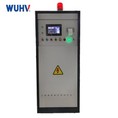



1. What is a Circuit Breaker Analyzer?
A Circuit Breaker Analyzer is a diagnostic instrument used to evaluate the performance and mechanical condition of medium-voltage (MV) and high-voltage (HV) circuit breakers by measuring timing, motion, contact resistance, coil currents, and more.
2. Why is circuit breaker analysis important?
Breakers are critical for system protection. Testing ensures:
Proper opening/closing times
Synchronized pole operation
Adequate contact pressure
Reliable mechanical/electrical operation
Compliance with IEC/IEEE standards
3. What are the main parameters measured by breaker analyzers?
| Parameter | Purpose |
|---|---|
| Open/Close time | Checks timing accuracy of each pole |
| Contact synchronization | Ensures simultaneous operation |
| Pre-insertion resistor timing | Verifies proper sequence (in some breakers) |
| Motion (displacement, velocity) | Checks mechanical health via motion sensors |
| Coil current profile | Detects coil strength, latch problems |
| Contact resistance | Assesses erosion, dirt, wear |
| Bounce time | Measures unwanted re-strikes or delays |
4. Which types of circuit breakers can be tested?
SF₆ breakers (most common in HV systems)
Vacuum circuit breakers (VCB)
Oil or air-blast breakers (legacy)
Gas-insulated switchgear (GIS) breakers)
Indoor/outdoor MV and HV CBs (3.3 kV – 800 kV)
5. What types of Circuit Breaker Analyzers exist?
| Type | Features |
|---|---|
| Basic timing analyzers | Measure open/close times only |
| Motion analyzers | Include travel sensors for mechanical evaluation |
| Complete analyzers | Test timing, motion, coil current, contact resistance |
| Online analyzers | Perform timing tests without removing control cables |
| Portable analyzers | Lightweight for field testing |
| Static/digital analyzers | Fully computer-controlled with digital sensors |
6. How are timing measurements performed?
By connecting to:
Breaker auxiliary contacts
Main contacts
Travel transducers (for movement measurement)
The analyzer applies trip/close commands and records all event sequences in milliseconds.
7. What is travel analysis and why is it important?
Travel analysis uses a linear or rotary transducer to:
Measure stroke, speed, overtravel, and rebound
Detect mechanical wear, misalignment, or slow movement
Verify compliance with manufacturer specs
8. What is coil current analysis?
The analyzer records current signature of trip and close coils to:
Detect coil burnout
Identify latch mechanism problems
Check for sluggish or delayed operation
9. How is contact resistance measured?
Using micro-ohmmeter function (DLRO):
Injects high DC current (typically 100A)
Measures milliohm-level resistance
Indicates wear, oxidation, or contamination at main contacts
10. Can a breaker analyzer test dual-function (trip/close) breakers?
Yes. Most advanced analyzers:
Support simultaneous test of trip/close coils
Allow customized control wiring for dual-function operation
11. Can tests be automated or remotely controlled?
Yes. Most analyzers include:
PC software for test sequencing
Automated test templates
Graphical reports
USB/Wi-Fi/Bluetooth data export or remote access
12. Which standards govern breaker testing?
IEC 62271-100 (HV AC breakers)
IEEE C37.09 (MV/HV breaker testing procedures)
IEC 56 / ANSI C37.06
Manufacturer guidelines (ABB, Siemens, GE, etc.)
13. Who are the leading manufacturers of circuit breaker analyzers?
Our company has been specializing in the production and manufacturing of frequency series resonance devices for 21 years. We operate a modern intelligent factory covering over 4000 square meters, equipped with more than 100 automated production, manufacturing, assembly, and testing machines. We have obtained CE certification and currently serve the over the word customers .
If you are looking for circuit breaker analyzers manufacturers and suppliers, please feel free to contact us for high quality and good price, we have various types of Tester for sales to solve your problems.
14. What accessories are used with breaker analyzers?
Travel transducers (linear/rotary)
Clamps and brackets
High-current clamps (for contact resistance)
Breakout cables for control wiring
Laptop with test software
Battery pack (for field work)
15. What safety precautions should be taken?
Always isolate breaker from live circuits
Verify correct wiring before applying control voltages
Use grounding cables when testing contacts
Follow lock-out/tag-out (LOTO) procedures
16. Can breaker analyzers store and compare test history?
Yes:
Store multiple test sets per breaker
Compare trends over time
Detect gradual degradation or timing drift
Integrate with asset management systems
17. How often should circuit breakers be tested?
Depends on:
Voltage level and duty cycle
Manufacturer recommendations
Regulatory standards
Typical intervals:
MV: every 2–4 years
HV: every 4–6 years
GIS: up to 10 years (or continuous monitoring)
18. Can I use one analyzer across different breaker types and voltages?
Yes. Most modern analyzers are universal:
Support customizable control inputs
Handle multiple trip/close coils
Include test plans for various manufacturers