

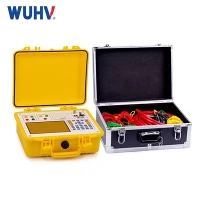


1. What is a PD Detector?
A PD Detector is a portable instrument used to detect, locate, and assess partial discharge activity in electrical insulation systems-especially in switchgear, cables, transformers, and motors. It helps quickly identify insulation deterioration without shutting down equipment.
2. What is the purpose of a PD Detector?
Early detection of insulation defects
Preventive maintenance and fault prediction
Quick scanning of switchgear, joints, terminations, etc.
Safety assurance before equipment failure
3. Where are PD Detectors used?
MV/LV switchgear panels
Cable joints and terminations
Power transformers (bushings, tap changers)
Motors and generators
GIS (Gas Insulated Switchgear)
4. What types of PD Detectors are there?
| Type | Description | Application |
|---|---|---|
| Ultrasonic Detectors | Detect acoustic emissions (20–100 kHz) | Outdoor insulators, open-air corona |
| TEV Detectors | Detect transient earth voltages | Metal-clad switchgear |
| UHF Detectors | Detect EM signals in GHz range | GIS and high-frequency PD |
| Combination Detectors | Combine TEV, ultrasonic, and IR sensors | General-purpose inspection |
| Online PD Testers | Real-time monitoring | Cable systems, rotating machines |
5. How does a PD Detector work?
It senses electrical, acoustic, or electromagnetic emissions from PD activity, using:
TEV sensors for internal discharge in metal-clad gear
Ultrasound sensors for external PD and corona
UHF sensors for GIS or high-speed activity
IR sensors or cameras (optional) to locate hotspots
6. What are key features to look for in a PD Detector?
Multi-sensor capability (TEV + Ultrasonic)
Live signal strength display
Phase-resolved PD analysis (optional)
Built-in camera or tagging system
Data logging or report generation
Wireless or Bluetooth connectivity
7. Can PD Detectors be used on energized equipment?
Yes - most PD detectors are designed for online use, meaning:
No shutdown required
Safe, contactless or non-invasive testing
Ideal for live switchgear, cables, and terminations
8. What are limitations of PD Detectors?
Only detects surface or accessible PD
Cannot classify defect types as precisely as lab-grade analyzers
Environmental noise (electrical or acoustic) may interfere
Not suitable for detailed PD pattern analysis or PRPD plots
9. How are PD Detector readings interpreted?
TEV readings: >20 dBμV may indicate internal PD
Ultrasonic level: >40 dB indicates active PD
Combined high readings: Strong evidence of defect
Manufacturers provide severity thresholds for decision-making.
10. What brands manufacture reliable PD Detectors?
We Wuhan UHV company has been specializing in the production and manufacturing of frequency series resonance devices for 21 years. We operate a modern intelligent factory covering over 4000 square meters, equipped with more than 100 automated production, manufacturing, assembly, and testing machines. We have obtained CE certification and currently serve the over the word customers .
If you are looking for PD Detectors manufacturers and suppliers, please feel free to contact us for high quality and good price, we have various types of tester for sales to solve your problems.
11. What are best practices for using a PD Detector?
Perform scanning in low-noise environments
Repeat readings from various locations
Compare with historical or baseline data
Tag locations for follow-up with offline PD analysis
Use headphones with ultrasonic detectors to pinpoint PD
12. How do PD Detectors support condition-based maintenance?
They enable:
Routine non-invasive inspections
Asset health ranking for switchgear panels
Targeted maintenance rather than time-based service
Failure prevention through early detection
13. Are PD Detectors suitable for cable testing?
Only partially:
Cable joints and terminations can be tested
Full-length PD location in cables requires:
HFCT sensors
Time-domain PD test systems or
TDR-based PD analyzers
14. Can PD Detectors generate reports?
Yes - advanced PD detectors allow:
Saving readings and trends
Tagging assets by name or ID
Exporting test data via USB/Bluetooth
Generating PDF/CSV reports for audit or recordkeeping
15. Do I need training to use a PD Detector?
Basic units are user-friendly, but:
Understanding PD signals
Recognizing environmental interference
Making proper condition assessments
all require some technical training, especially for substation or critical asset inspections.