

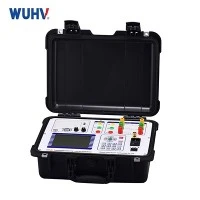


Testing the capacity of a transformer involves conducting various tests to assess its ability to handle load and deliver the required power output under specified operating conditions. These tests are performed to determine if the transformer meets design specifications, efficiency standards, and regulatory requirements. Here are some common methods used to test the capacity of a transformer:
Load Test: The load test is conducted to determine the actual power output of the transformer under specified load conditions. This test involves connecting resistive loads or load banks to the transformer's secondary winding and gradually increasing the load to the rated capacity while monitoring parameters such as voltage, current, power factor, and temperature. The load test verifies the transformer's ability to deliver the rated power output without exceeding temperature limits or voltage regulation limits.
Short-Circuit Test: The short-circuit test, also known as the impedance test or locked rotor test, is conducted to determine the transformer's ability to withstand short-circuit conditions and deliver the rated current under fault conditions. In this test, a low-impedance short-circuit is applied to the transformer's secondary winding, and parameters such as voltage, current, and temperature are monitored to assess the transformer's short-circuit withstand capability.
Temperature Rise Test: The temperature rise test is conducted to determine the temperature rise of the transformer's windings and insulation when operating at rated load conditions. This test involves energizing the transformer at rated voltage and frequency with a resistive load or load bank connected to the secondary winding, and monitoring temperature rise using temperature sensors or thermal imaging cameras. The temperature rise test verifies that the transformer can operate within specified temperature limits under load conditions.
Insulation Resistance Test: The insulation resistance test is conducted to assess the insulation resistance of the transformer's windings and insulation system. This test involves applying a high-voltage DC or AC test voltage between the windings and ground and measuring the insulation resistance using a megohmmeter or insulation resistance tester. The insulation resistance test verifies the integrity of the insulation system and ensures that the transformer can withstand voltage stress without breakdown.
Voltage Regulation Test: The voltage regulation test is conducted to determine the transformer's ability to maintain a constant output voltage within specified limits under varying load conditions. This test involves applying load steps to the transformer's secondary winding and measuring the output voltage at each load step. The voltage regulation test verifies that the transformer can regulate output voltage within acceptable limits under different load conditions.
Efficiency Test: The efficiency test is conducted to determine the efficiency of the transformer under specified load conditions. This test involves measuring the input and output power of the transformer and calculating the efficiency using the formula: Efficiency (%) = (Output Power / Input Power) x 100%. The efficiency test verifies that the transformer meets efficiency standards and regulatory requirements.
These tests are typically performed during factory acceptance testing (FAT) or site acceptance testing (SAT) of transformers to ensure that they meet design specifications and performance requirements before being installed and commissioned in power systems.