

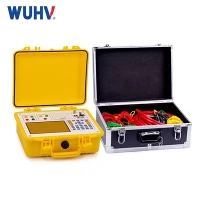


The purpose of the no-load test and the blocked rotor test, also known as the locked rotor test, is to determine key performance parameters of a three-phase induction motor. These tests provide valuable information about the motor's efficiency, losses, and operating characteristics under different load conditions. Here's a brief overview of the purpose of each test:
No-Load Test:
Purpose: The no-load test is conducted to determine the no-load current, no-load power factor, and core losses of the motor when it is running without any mechanical load connected to its shaft.
Procedure: In this test, the motor is operated at rated voltage and frequency with the rotor left open-circuited or unloaded. Measurements are taken of the no-load current, no-load power factor, and input power to calculate the core losses. The motor runs at no-load speed during this test.
Blocked Rotor Test (Locked Rotor Test):
Purpose: The blocked rotor test is conducted to determine the locked rotor current, locked rotor power factor, and total impedance of the motor when the rotor is blocked or held stationary, simulating a condition where the motor is started with its rotor blocked.
Procedure: In this test, the motor is operated with its rotor mechanically blocked or held stationary while connected to a reduced voltage source. Measurements are taken of the locked rotor current, locked rotor power factor, and input power to calculate the total impedance of the motor. The motor does not rotate during this test.
Both tests provide valuable data that can be used to calculate other important motor parameters, such as winding resistance, reactance, and leakage impedance. This information is essential for motor design, performance analysis, efficiency calculations, and troubleshooting. Additionally, the results of these tests can help assess the motor's suitability for specific applications and determine its operating characteristics under various load conditions.