

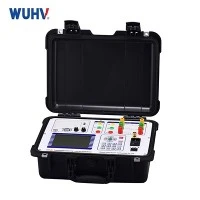


Choosing the right VLF (Very Low Frequency) Cable Hipot Tester depends on your voltage level, cable type, testing objective, and operational environment. Here's a comprehensive guide to help you select the most suitable tester:
1. Define the Application
| Question | Why It Matters |
|---|---|
| What is the rated voltage of the cable? | Determines the required output voltage of the tester. |
| What is the insulation type (e.g. XLPE, EPR, PILC)? | Affects test waveform and voltage level needed. |
| Are you doing commissioning, maintenance, or repair testing? | Commissioning = withstand only; maintenance = diagnostics recommended. |
| Is field portability needed? | Affects size, weight, and power input selection. |
2. Key Selection Criteria
A. Output Voltage Rating
Your tester must provide 1.5× to 3× the system's phase-to-ground voltage.
Example:
15 kV cable → phase-to-ground = 8.66 kV → Tester output ≥ 20–30 kV RMS.
B. Waveform Type
| Waveform | Use Case |
|---|---|
| Sine wave | Recommended by IEEE 400.2 for withstand and tan delta testing. |
| Square/trapezoidal wave | Lower cost, acceptable only for basic withstand testing. |
| Tip | For compliance and diagnostics, always choose true sinewave output. |
C. Frequency Range
Most VLF testers use 0.1 Hz, some allow variable (0.01–0.1 Hz).
Lower frequencies enable testing longer cables with the same power level.
3. Testing Capabilities
| Test Function | Needed For |
|---|---|
| Withstand (Hipot) | Basic pass/fail insulation test |
| Tan Delta (Dissipation Factor) | Insulation aging, moisture detection |
| Partial Discharge (PD) Detection | Locating weak points or defects in cable |
| Tip | If you're doing condition-based maintenance, choose a model with tan δ or PD. |
4. Control Features & Safety
| Feature | Description |
|---|---|
| Digital interface | For setting voltage, time, ramp, etc. |
| Auto ramp-up & hold timers | Automates IEEE 400.2 test cycles |
| Emergency stop & safety interlock | Required for operator safety |
| Cable discharge unit | Automatically grounds cable after test |
| Data logging & USB/export | For reports and test recordkeeping |
5. Portability & Power Requirements
| Item | Notes |
|---|---|
| Size/weight | Crucial for field use or substation testing |
| Wheels/carry case | Important for mobility |
| Power supply | 110V / 230V AC or generator-compatible for remote use |
6. Standards Compliance
Ensure your tester meets:
IEEE 400.2 – VLF withstand test guidelines
IEC 60502-2 – Medium voltage cable test methods
IEEE 400.3 – Partial Discharge Testing
IEEE 400.4 – Tan Delta Diagnostic Testing
HD 620 S1 (Europe)
7. Budget Range (USD)
| Tester Type | Approx. Price |
|---|---|
| Basic VLF Hipot (20–40 kV RMS) | $7,000 – $15,000 |
| VLF + Tan Delta | $15,000 – $30,000 |
| VLF + PD + Tan Delta | $30,000 – $60,000+ |
8. Top Brands to Consider
Wuhan UHV Power Technology Co.,Ltd Focused on High Voltage Test Equipment manufacturing for 21 years, a professional supplier in China, offering factory prices!
https://www.uhvtest.com/high-voltage-tester/vlf-hipot-tester/vlf-cable-tester.html
Final Checklist Before Buying
✔️ Matches your cable's voltage and insulation type
✔️ Sinewave output (for standards compliance)
✔️ Test frequency suitable for cable length
✔️ Withstand test at minimum; diagnostics if needed
✔️ Portable enough for your site
✔️ Offers safety features and auto shutdown
✔️ Data logging/reporting support
✔️ Backed by strong service and support