

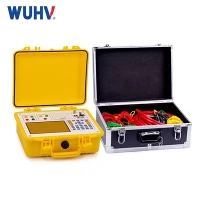


A VLF (Very Low Frequency) tester is a type of electrical testing equipment used for assessing the condition of high-voltage cables, particularly for medium and high voltage levels. VLF testing involves applying an AC (Alternating Current) voltage at a very low frequency to the cable to evaluate its insulation integrity. The primary purpose of a VLF tester is to perform cable withstand and diagnostic testing. Here are the key functions and applications of a VLF tester:
1. Cable Withstand Testing:
Purpose: To determine the ability of the cable insulation to withstand high-voltage stress without breaking down.
How it Works: A VLF tester generates a high-voltage AC signal at a very low frequency (typically between 0.1 Hz and 0.01 Hz). This low frequency allows for a longer duration of the test signal, making it more suitable for detecting potential issues in the cable insulation.
2. Cable Diagnostics:
Purpose: To identify and diagnose potential weaknesses or defects in the cable insulation.
How it Works: By applying a VLF AC voltage, the tester can reveal partial discharges, cable defects, or other insulation issues that might not be apparent under standard power frequency conditions. This helps in assessing the overall health of the cable.
3. DC Leakage Current Testing:
Purpose: To measure the leakage current in the cable under VLF conditions.
How it Works: The VLF tester measures the leakage current, which is an indication of the cable's insulation resistance. An increase in leakage current may suggest insulation deterioration or contamination.
4. Condition Assessment of Underground Cables:
Purpose: To evaluate the condition of underground cables, especially those used in power distribution networks.
How it Works: VLF testing is particularly useful for assessing the condition of long underground cables. It helps utilities identify potential issues before they lead to failures or outages.
5. Quality Control in Cable Manufacturing:
Purpose: To ensure the quality and reliability of cables during the manufacturing process.
How it Works: VLF testing is used to check newly manufactured cables for insulation integrity and detect any defects that may have occurred during the manufacturing process.
6. Partial Discharge Detection:
Purpose: To identify partial discharges within the cable insulation.
How it Works: VLF testing can reveal partial discharges that might occur at weak points in the cable insulation. Detecting partial discharges is crucial for preventive maintenance and avoiding potential cable failures.
7. Tan Delta Testing:
Purpose: To measure the dielectric loss in the cable insulation.
How it Works: VLF testers with tan delta measurement capability assess the dielectric properties of the cable insulation. An increase in tan delta may indicate the presence of moisture or contamination.
Important Considerations:
Frequency Range: VLF testers typically operate at frequencies ranging from 0.1 Hz to 0.01 Hz, making them suitable for extended duration testing.
Safety: While VLF testing involves lower frequencies than power frequency AC, safety precautions are still essential. Adequate insulation and safety measures are implemented to protect the testing personnel and equipment.
VLF testing provides a reliable and non-destructive method for assessing the condition of high-voltage cables, making it a valuable tool for maintenance, diagnostics, and quality control in power systems.