

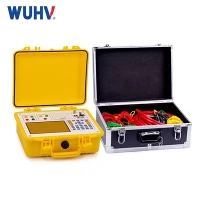


The terms "HV generator" and "LV generator" refer to generators that produce high voltage (HV) and low voltage (LV), respectively. The main difference lies in the output voltage levels they are designed to generate. Here's a brief explanation of the key distinctions between HV generators and LV generators:
High-Voltage (HV) Generator:
Output Voltage:
HV generators are designed to produce high output voltages, often in the range of kilovolts (kV) or higher. The exact voltage level can vary based on the specific application and requirements.
Applications:
HV generators are commonly used for applications that require high voltages, such as:
High-voltage testing and insulation testing.
Particle accelerators for research in high-energy physics.
X-ray generators for medical imaging and industrial applications.
Certain scientific experiments and laboratory setups.
Components:
HV generators may incorporate voltage multipliers, transformers, and other components to achieve the desired high output voltage.
Safety Considerations:
Working with HV generators requires careful attention to safety due to the higher voltages involved. Insulation, protective barriers, and safety measures are crucial to prevent electrical hazards.
Low-Voltage (LV) Generator:
Output Voltage:
LV generators are designed to produce lower output voltages, typically below 1,000 volts. The voltage range can vary based on the generator's design and intended applications.
Applications:
LV generators are commonly used for applications that operate at lower voltage levels, including:
Standard electrical power generation for residential, commercial, and industrial use.
Portable generators for providing backup power.
Small-scale electrical systems and devices.
Components:
LV generators may include components like alternators, engines, and voltage regulators to generate and control lower voltage levels.
Safety Considerations:
While LV generators operate at lower voltages compared to HV generators, safety measures are still important to prevent electrical shocks and ensure the safe operation of electrical systems.
Summary:
HV Generator:
Designed for applications requiring high output voltages (kV or higher).
Used in high-voltage testing, particle accelerators, X-ray generation, and specialized experiments.
Requires careful safety precautions due to higher voltages.
LV Generator:
Generates lower output voltages, typically below 1,000 volts.
Commonly used for standard electrical power generation, portable generators, and small-scale electrical systems.
Safety measures are still important but may not involve the same level of precautions as HV generators.
The choice between HV and LV generators depends on the specific requirements of the application, the voltage levels needed, and safety considerations. Each type of generator is designed to meet the demands of its intended applications.