

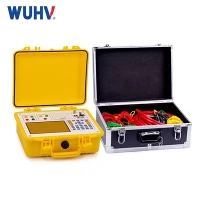


In the context of a transformer, a continuity test is a diagnostic test conducted to check for electrical continuity between various components or windings within the transformer. The purpose of this test is to ensure that the conductive paths within the transformer are intact and that there are no open circuits or discontinuities that could affect its operation.
During a continuity test in a transformer, a multimeter or continuity tester is typically used to measure the resistance between specific points or terminals. The test involves checking for electrical continuity between:
Primary and Secondary Windings: This verifies that there is a continuous electrical path between the primary winding and the secondary winding, ensuring that the transformer can transfer electrical energy from the primary side to the secondary side.
Individual Taps or Windings: In transformers with multiple taps or windings, such as multi-tap distribution transformers, the continuity test is performed to ensure that there are no open circuits between different taps or windings.
Core and Windings: The continuity test may also involve checking for electrical continuity between the transformer's core and its windings. This ensures that the windings are properly connected to the core and that there are no insulation failures or discontinuities.
Grounding Connections: Additionally, the continuity test may verify the continuity of grounding connections or bonding between various metallic components of the transformer, ensuring proper grounding and electrical safety.
During the continuity test, the multimeter or continuity tester measures the resistance between the specified points or terminals. A low resistance reading (near zero ohms) indicates electrical continuity, while a high resistance reading (infinite or open circuit) indicates a lack of continuity, suggesting an open circuit or discontinuity.
By performing a continuity test, technicians and engineers can quickly identify any electrical continuity issues within the transformer, allowing for prompt troubleshooting and corrective action if necessary. This helps ensure the proper functioning and reliability of the transformer in electrical power systems.