

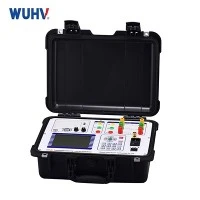


A Resonant Test Set is a specialized high-voltage testing device used to perform insulation tests on electrical equipment, particularly in the power and electrical industries. It works based on the principle of resonance, which is used to create a high-voltage AC (alternating current) test signal. Resonant test sets are typically used for testing the insulation of cables, transformers, and other high-voltage equipment under real-world operating conditions.
Purpose
The main purpose of a resonant test set is to apply a controlled, high-voltage AC to electrical components to test their ability to withstand operating conditions without insulation breakdown. The resonant method allows for testing of larger equipment with a smaller power supply while generating high voltages required for testing. The test is particularly important for:
Verifying insulation integrity: Ensuring that electrical equipment has strong, intact insulation that can handle operating conditions.
Simulating real operating conditions: Because the resonance-based test generates a high-voltage AC similar to the voltage encountered during normal operation, it's more accurate for testing than DC tests.
Efficient and cost-effective high-voltage testing: Resonant test sets are designed to minimize the size of the required test equipment, making them more portable and cost-effective compared to traditional high-voltage sources.
How It Works
A resonant test set works by using the principle of resonance to achieve high voltages with relatively low power input. It consists of three main components:
High-Frequency AC Source: The source generates a high-frequency alternating current. This is typically a high-voltage transformer or inverter.
Test Capacitor: The capacitor is used to store electrical energy.
Inductor: The inductor is designed to have a specific inductance that, when combined with the test capacitor, creates resonance.
The Process:
Resonance Formation: The test set operates by tuning the frequency of the high-frequency AC source to the natural resonant frequency of the test capacitor and inductor combination. This frequency is typically in the range of 10–200 Hz, which allows for efficient energy transfer.
High Voltage Generation: When resonance is achieved, the energy stored in the capacitor is amplified, and the resulting voltage is significantly higher than the voltage input from the power source.
Voltage Application: This resonant voltage is then applied to the equipment under test (EUT), such as a transformer or a cable, to test the integrity of its insulation.
Because of the high voltage created by the resonance, the test set can simulate high-voltage conditions even with relatively small equipment, making it ideal for large-scale tests on transformers, cables, and substations.
Applications
Resonant test sets are mainly used in the power industry for testing equipment like:
Power Transformers: Ensures insulation is intact and capable of withstanding high voltages.
High-Voltage Cables: Tests the quality of insulation and verifies that cables can withstand high operating voltages.
Switchgear: Ensures that high-voltage switchgear can handle operational voltage stress without insulation breakdown.
Generators and Motors: Insulation testing to verify the durability and resistance of motor and generator windings under high voltage.
Circuit Breakers: Tests for reliable operation under high-voltage conditions.
Substations: Used for large-scale tests of various electrical components within substations to ensure their reliability in the grid.
Test Steps
Here are the typical steps involved when performing a resonant test:
Preparation:
Ensure the test equipment, including the resonant test set, is properly calibrated.
Confirm that the system under test (SUT), such as a transformer or cable, is properly connected and isolated.
Wear appropriate Personal Protective Equipment (PPE), including gloves, insulated footwear, and safety glasses.
Connection:
Connect the resonant test set to the SUT. This typically involves connecting the high-voltage terminals of the test set to the SUT's terminals and ensuring proper grounding.
Ensure the SUT is isolated from the power grid and disconnected from any live circuits to prevent electrical hazards.
Setting Up the Frequency:
Adjust the frequency of the AC source to match the resonant frequency of the test capacitor and inductor combination.
Set the desired test voltage, usually specified by industry standards or manufacturer guidelines.
Resonance Adjustment:
Slowly increase the input frequency of the AC source until resonance is achieved. This is typically indicated by a sharp increase in voltage.
Monitor the voltage levels to ensure they are within the safe testing limits for the SUT.
Application of High Voltage:
Once resonance is reached, allow the test set to apply the resonant high voltage to the SUT.
Monitor the test duration, typically ranging from 5 to 15 minutes depending on the type of equipment being tested.
Monitoring for Failures:
During the test, monitor for signs of insulation breakdown, such as leakage current, discharge, or arcing.
The resonant test set often has a built-in measurement system to detect any abnormalities in current or voltage.
Post-Test Disconnection:
Once the test is complete, gradually reduce the voltage and disconnect the resonant test set from the SUT.
Ensure the system under test is not under any voltage before disconnecting the test set.
Inspection:
Inspect the SUT for any visible signs of damage, breakdown, or wear.
Review the test data to evaluate the insulation condition. If the SUT passes the test (i.e., no leakage current or breakdown occurs), it is considered safe for operation. Otherwise, repairs or further diagnostics may be required.
Advantages of Resonant Test Sets
High Efficiency: Resonant testing allows for the generation of high voltage with relatively low power, making it more efficient than conventional high-voltage test sets.
Compact and Portable: The test set is smaller and more portable, which is advantageous in field testing scenarios.
Cost-Effective: Since the resonant method uses less power and requires less equipment, it is more cost-effective for high-voltage testing, especially for large equipment.
If you are looking for Resonant Test Set manufacturers and suppliers, please feel free to contact us for high quality and googl price of the Resonant Test Set and a more detailed introduction. As an enterprise of Resonant Test Set , last 21years,we design, development, manufacturing and marketing in China, we have various types of Resonant Test Set for sales to solve your problems.