

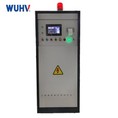
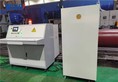
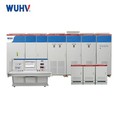
CT and PT refer to Current Transformers and Potential Transformers, respectively. These are instrumental devices used in power systems to measure and monitor electrical currents and voltages accurately. CT and PT testing involves various procedures to ensure the proper functioning and accuracy of these transformers. Here's a brief overview of CT and PT testing:
Current Transformer (CT) Testing:
Ratio Test:
The primary purpose of a CT is to transform high currents in the primary circuit to a proportional lower current in the secondary circuit. The ratio test verifies that the turns ratio between the primary and secondary windings is within specified limits.
Polarity Test:
CTs have a specific polarity, indicating the direction of the current flow. The polarity test ensures that the current direction sensed by the CT matches the prescribed direction.
Excitation Test:
The excitation test checks the CT's performance under different levels of primary current. It ensures that the CT provides accurate secondary current over its specified range of primary current values.
Insulation Resistance Test:
This test measures the insulation resistance between the CT windings and the transformer's core. It helps identify any insulation breakdown or degradation.
Saturation Test:
Saturation testing is performed to determine the point at which the CT core becomes saturated. Saturation affects the accuracy of current measurements, and this test ensures that the CT operates within its linear range.
Potential Transformer (PT) Testing:
Ratio Test:
Similar to CTs, PTs undergo a ratio test to confirm that the turns ratio between the primary and secondary windings is within specified limits. PTs step down high voltages to a level suitable for metering and protection devices.
Polarity Test:
PTs also have a specified polarity, indicating the direction of voltage. The polarity test ensures that the PT's output voltage is in the correct phase relationship with the primary voltage.
Excitation Test:
The excitation test for PTs evaluates their performance at different levels of primary voltage. It ensures that the PT provides accurate secondary voltage over its specified range of primary voltage values.
Insulation Resistance Test:
Similar to CTs, PTs undergo an insulation resistance test to check for any insulation breakdown or degradation.
Dielectric Strength Test:
This test involves applying a higher-than-normal voltage to the PT to ensure that its insulation can withstand voltage stress without breaking down.
Both CT and PT testing are essential to maintain the accuracy and reliability of instrument transformers in power systems. Regular testing helps identify potential issues, ensures compliance with standards, and contributes to the overall safety and efficiency of the electrical infrastructure. Testing is typically conducted during commissioning, routine maintenance, and in response to any suspected faults or performance issues.