

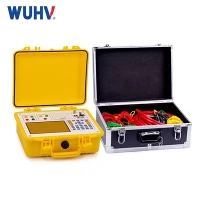


The VLF (Very Low Frequency) and Hipot (High Potential) tests are both used for insulation testing in electrical equipment, but they are quite different in terms of the testing process, voltage levels, and applications. Here's a breakdown of their differences:
1. Test Purpose:
VLF Test:
The VLF test is primarily used to assess the insulation quality of high-voltage cables and other electrical equipment by applying a low-frequency voltage (typically 0.1 Hz to 0.1 kHz). This test helps detect any insulation degradation that could lead to electrical breakdowns. It is especially useful for cables that operate at high voltages and need to ensure long-term reliability under varying conditions.
Hipot Test:
The Hipot (or High Potential test) is used to evaluate the dielectric strength and integrity of an electrical insulation system by applying a high-voltage AC or DC stress to the equipment being tested. It checks if the insulation can withstand an electrical stress without breaking down. Hipot tests are commonly performed on electrical devices like transformers, circuit breakers, motors, and generators.
2. Test Frequency:
VLF Test:
VLF testing uses very low frequency (typically 0.1 Hz to 0.1 kHz), which simulates the conditions that cables will experience in real-world operation. This low-frequency voltage is easier to apply over long distances and is less likely to cause premature insulation breakdown, making it ideal for testing cables.
Hipot Test:
Hipot testing is usually done with high-frequency AC or DC (50/60 Hz for AC or DC testing), which is the same as the operating frequency of standard electrical systems. This higher frequency voltage tests the insulation at the level it would experience under typical operational conditions.
3. Voltage Level:
VLF Test:
VLF tests are typically performed with high-voltage sources (up to 100 kV or more), but the current is very low, so the test stresses the insulation without overheating it.
Hipot Test:
Hipot tests also use high voltages, generally between 1.5 to 2 times the rated voltage of the equipment under test. The voltage can go up to several hundred kilovolts, depending on the type of equipment being tested. The key difference here is that the high-voltage is applied at higher frequencies or DC, which is more of a stress test for insulation.
4. Duration of the Test:
VLF Test:
The VLF test is typically a long-duration test (several minutes to hours), applied for 24 hours in some cases, as it is intended to simulate operational stress over a prolonged period. It helps in detecting insulation weaknesses that could develop over time.
Hipot Test:
The Hipot test is usually a short-duration test (usually a few minutes) to check for insulation breakdown or weaknesses by applying a stress voltage for a set period of time (typically 1-5 minutes).
5. Equipment Tested:
VLF Test:
Primarily used for testing cables, high-voltage conductors, and large electrical components such as transformers and switchgear.
Hipot Test:
Typically applied to electrical devices, including motors, generators, transformers, circuit breakers, and other electrical apparatus, to verify the quality and integrity of their insulation.
6. Test Results:
VLF Test:
The VLF test provides more detailed information about the condition of the insulation, and it is particularly useful for cables or systems that have been in service for long periods, where aging could have occurred.
Hipot Test:
The Hipot test results can indicate whether an insulation failure has occurred, but it's generally more binary (pass/fail) and is less suited to detect minor degradation or weaknesses in older insulation.
7. Advantages and Disadvantages:
VLF Test:
Advantages:
Can test cables over long distances.
More realistic for simulating operational conditions.
Can identify weaknesses that may not be immediately apparent in a short-duration test.
Disadvantages:
Longer testing time.
Requires more specialized equipment.
Hipot Test:
Advantages:
Quick results, often used for quality control or final product verification.
Versatile for different types of electrical equipment.
Disadvantages:
Can be less effective for cables and systems where high-voltage durability over long periods is needed.
Can cause damage to weak insulation if not carefully monitored.
8. Typical Applications:
VLF Test:
Cables (underground or high-voltage).
Electrical power distribution systems.
Large, high-voltage equipment like transformers and switchgear.
Hipot Test:
Small electrical devices (motors, appliances, transformers).
High-voltage equipment like generators and circuit breakers.
Final product testing in manufacturing or repair processes.
9. Industry Standards:
VLF Test:
Often governed by standards such as IEC 60502-2, IEEE 400, or ASTM D2775 for power cables and related equipment.
Hipot Test:
Common standards for Hipot testing include IEC 60204-1, IEEE 43, and UL 506 for electrical equipment.
Summary of Key Differences:
| Aspect | VLF Test | Hipot Test |
|---|---|---|
| Frequency | Very Low Frequency (0.1 Hz - 1 kHz) | Standard AC (50/60 Hz) or DC |
| Voltage Level | High voltage, low current | High voltage (1.5 - 2x rated voltage) |
| Test Duration | Long duration (minutes to hours) | Short duration (1 - 5 minutes) |
| Test Equipment | Mainly cables, high-voltage equipment | Electrical devices (motors, generators, etc.) |
| Primary Purpose | Detect long-term insulation degradation | Stress-test insulation and check for breakdown |
| Application | Cables, transformers, switchgear | Motors, transformers, circuit breakers |
If you are looking for VLF Test manufacturers and hipot test suppliers, please feel free to contact us.As an factory of Transformer Test Set, we integrats design, development, manufacturing and marketing in China, Wuhan UHV Power Technology has various types of VLF Test and hipot test for sales to solve your problems.