

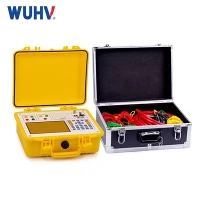


Yes, a multimeter can often be used as a substitute for a voltage tester in many situations, especially for basic voltage measurements. Both multimeters and voltage testers are tools used to measure voltage, but they have some differences in terms of features, design, and applications.
Here are some considerations when using a multimeter as a substitute for a voltage tester:
Voltage Ranges:
Multimeters typically have various voltage ranges (e.g., 200mV, 2V, 20V, 200V, 1000V for DC voltage) that allow you to select the appropriate range for your measurement. Voltage testers often have a fixed range or limited range options.
Functionality:
Multimeters are versatile tools that can measure various electrical parameters, including voltage, current, resistance, and sometimes additional features like capacitance and frequency. Voltage testers are designed specifically for voltage detection.
Display:
Multimeters provide a numeric readout of the measured voltage on a digital display, allowing for more precise readings. Voltage testers typically have a simpler visual or audible indicator to show the presence of voltage.
Safety Features:
Some multimeters are equipped with additional safety features, such as fused input protection and higher safety ratings (CAT III or CAT IV) suitable for use in different electrical environments.
Contact vs. Non-Contact:
Voltage testers often include non-contact voltage detection, allowing you to identify the presence of voltage without making physical contact with the conductor. Some multimeters also offer non-contact voltage detection features, but many still require direct contact with the circuit.
Application:
While a multimeter can be used for a wide range of electrical measurements, a voltage tester is specifically designed for quickly checking the presence of voltage. Voltage testers are often preferred for simple voltage detection tasks due to their simplicity and ease of use.
If you're using a multimeter as a substitute for a voltage tester, make sure to:
Set the multimeter to the appropriate voltage range for your measurement.
Follow safety procedures and wear appropriate personal protective equipment.
Take precautions to avoid accidental contact with energized parts.
Keep in mind that if your primary task is to check for the presence of voltage, and you don't need additional measurement capabilities, a dedicated voltage tester may be more straightforward and convenient for quick checks. Always refer to the user manual of your multimeter and follow safety guidelines for your specific application.