

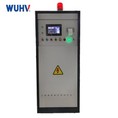
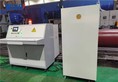
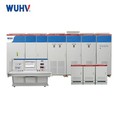
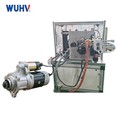
A VLF (Very Low Frequency) Hipot tester set is used to apply high AC voltage at a very low frequency (typically 0.1 Hz or lower) to evaluate insulation integrity of medium- and high-voltage cables. Selecting the right set depends on your system voltage, test standards, test type (pass/fail or diagnostic), and operational conditions.
1. Define Your Application First
| Question | Why It Matters |
|---|---|
| What is the rated voltage of the cable/system? | Determines required output voltage |
| What is the test type? | Commissioning (withstand only) or maintenance (diagnostic) |
| What is the cable length/capacitance? | Determines required load capacity |
| Where will you test? | Field use requires portability, weather resistance |
| Do you need diagnostics? | Tan Delta or Partial Discharge options add value for maintenance |
2. Core Specifications to Look For
A. Output Voltage Range
Choose a tester with at least:
1.5× to 3× the phase-to-ground voltage (based on IEEE 400.2)
| Cable System Voltage | Recommended VLF Hipot Output (Peak) |
|---|---|
| 11 kV | 20 – 30 kV |
| 22 kV | 40 – 45 kV |
| 33 kV | 60 – 70 kV |
| 66 kV | 80 – 100 kV |
| 110+ kV | ≥120 kV (custom units) |
For a 66 kV system, you should choose at least an 80 kV peak output tester.
B. Waveform Type
| Type | Suitability |
|---|---|
| Sinewave (True VLF) | ✅ Required by standards (IEEE 400.2) |
| Square/Trapezoidal | ⚠️ Cheaper but not suitable for diagnostics (PD/tan δ) |
Choose true sinewave VLF output to remain compliant with global testing standards.
C. Frequency Range
Standard: 0.1 Hz
For longer/higher capacitance cables: adjustable down to 0.01 Hz
Lower frequencies allow testing longer cables without overload
D. Capacitive Load Capability
VLF testers charge the capacitance of the cable (measured in µF).
Ensure your tester supports your maximum expected cable load at your test frequency and voltage.
3. Feature Checklist
| Feature | Importance |
|---|---|
| Auto ramp, hold, step timer | Required for standardized testing |
| Built-in discharge unit | Safety after testing |
| Digital voltage/current meter | For monitoring during test |
| Emergency stop & HV interlock | Operator safety |
| PC/USB reporting & storage | For reports, audits, and maintenance logs |
| Rugged, portable design | For field deployment |
4. Optional Diagnostic Features
| Diagnostic | Use |
|---|---|
| Tan Delta (Dissipation Factor) | Detect insulation aging/moisture |
| Partial Discharge (PD) | Locate internal defects (voids, poor splices) |
Withstand-only test = basic VLF
Condition-based testing = VLF + Tan Delta + PD (recommended for aged or critical assets)
5. Portability & Environment
| Factor | Tip |
|---|---|
| Size/weight | Prefer ≤40–60 kg with wheels or case |
| Cooling | Fan or air-cooled for long test durations |
| Power Input | 110V/230V AC or generator compatible |
| IP Rating | Choose IP54 or higher for outdoor use |
6. Compliance Standards
Make sure the tester complies with:
IEEE 400.2 – VLF withstand test
IEEE 400.3 – PD testing (if applicable)
IEEE 400.4 – Tan Delta testing
IEC 60502-2, HD 620 S1 – Medium voltage cable standards
7. Recommended VLF Hipot Tester Sets
| Brand | Model | Output | Features |
|---|---|---|---|
| b2hv | HVA30 / HVA60 / HVA90 | 30–90 kV peak | Compact, sinewave, diagnostic optional |
| Megger | VLF Sine 45/62 TD | Up to 62 kV RMS (88 kV peak) | Sinewave, built-in tan δ |
| HV Diagnostics | HVA34TD / HVA60 / HVA90 | 34–90 kV peak | Advanced diagnostics, field-proven |
| BAUR | frida TD / viola TD | 45–90 kV | Premium diagnostics (PD/tan δ), auto test cycles |
| Hipotronics / Haefely | 80–120 kV | Custom HV systems | Industrial-grade, diagnostics available |
8. Budget Range (USD)
| Type | Price Estimate |
|---|---|
| Basic VLF (30–60 kV, no diagnostics) | $7,000 – $15,000 |
| VLF + Tan Delta | $15,000 – $30,000 |
| VLF + PD + Tan Delta | $30,000 – $60,000+ |
| Custom HV VLF (≥100 kV) | $60,000 – $100,000+ |
Summary: How to Choose the Right VLF Hipot Tester Set
| Selection Factor | Target |
|---|---|
| Voltage Output | ≥ test voltage (e.g., 80 kV peak for 66 kV cables) |
| Waveform | True sinewave |
| Frequency | 0.1 Hz or adjustable down to 0.01 Hz |
| Capacitive Load | Matches longest cable under test |
| Withstand Test | Minimum requirement |
| Tan Delta / PD | Optional for diagnostics |
| Portability | Essential for field testing |
| Safety Features | Required (E-stop, discharge, interlock) |
| Reporting/Logging | For test records and QA |