

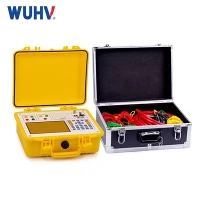


1. What is a Flash Point Tester?
A Flash Point Tester is an instrument used to determine the lowest temperature at which a liquid emits enough vapor to ignite in the presence of an ignition source.
2. Why is flash point important?
Measures flammability and fire risk of liquids
Crucial for safety classification, handling, and transport
Helps monitor product quality, especially for lubricants, fuels, and transformer oil
Required by safety regulations (OSHA, DOT, GHS)
3. What types of flash point testers are available?
| Type | Description |
|---|---|
| Open Cup (e.g., Cleveland Open Cup - COC) | Sample exposed to air; suitable for heavy oils |
| Closed Cup (e.g., Pensky-Martens, Abel, Tag, Setaflash) | Sample enclosed; mimics real-world conditions; more accurate |
4. What is the difference between open and closed cup methods?
Open Cup: Higher readings; vapors escape into the air
Closed Cup: Lower readings; vapors concentrate above the liquid
Closed cup is preferred for regulatory and safety testing due to more realistic hazard representation.
5. Which flash point test methods are most commonly used?
| Standard | Description |
|---|---|
| ASTM D92 | Cleveland Open Cup (COC) |
| ASTM D93 | Pensky-Martens Closed Cup |
| ASTM D56 | Tag Closed Cup (low-viscosity) |
| ISO 2719 | International equivalent to ASTM D93 |
| ASTM D3278 | Setaflash (rapid spot testing) |
6. What materials are tested with a flash point tester?
Transformer oil
Diesel and gasoline
Lubricants and hydraulic oils
Paints, solvents, alcohols
Waste oils and chemicals
7. What is a typical flash point range?
| Material | Flash Point (approximate) |
|---|---|
| Gasoline | -43 °C |
| Diesel | 52–96 °C |
| Kerosene | 38–72 °C |
| Transformer oil | >135 °C (typically) |
8. How does a flash point tester work?
The sample is heated at a controlled rate.
At set intervals, a flame or electric spark is introduced.
The temperature at which a flash occurs is recorded as the flash point.
9. Are automatic flash point testers available?
Yes. Modern testers are often fully automatic and include:
Programmable test profiles
Digital temperature control
Ignition detection sensors
Data logging & printing
10. What are the benefits of automatic testers?
Enhanced accuracy and repeatability
Time saving and safe operation
Reduced human error
Compliance with multiple international standards
11. Who uses flash point testers?
Electrical utilities (for insulating oil)
Petroleum and chemical industries
Paint, ink, and coating manufacturers
Research labs and quality control teams
Hazmat handling and transport authorities
12. Popular manufacturers and models?
If you are looking for Flash Point Tester manufacturers and suppliers, please feel free to contact us for high quality and good price, we have various types of tester for sales to solve your problems.
Our company has been specializing in the production and manufacturing of frequency series resonance devices for 21 years. We operate a modern intelligent factory covering over 4000 square meters, equipped with more than 100 automated production, manufacturing, assembly, and testing machines. We have obtained CE certification and currently serve the over the word customers .
13. What precautions should be taken during flash point testing?
Perform testing in a ventilated and flame-proof area
Avoid sample contamination
Use proper cleaning between tests
Follow test standards strictly
14. How often should calibration be done?
Calibration should be annually, or per internal QA protocols
Use certified flash point reference standards
15. Is flash point testing mandatory?
Yes, especially for:
Transportation of hazardous goods (per UN/IMDG/DOT regulations)
Labeling under GHS/CLP regulations
Quality control in oil-based products