


Product introduction
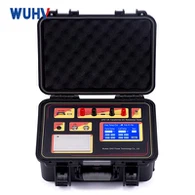
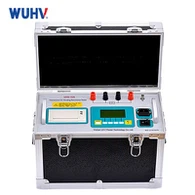
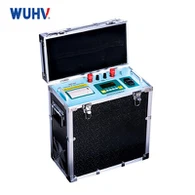
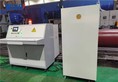
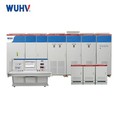
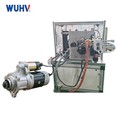
A Transformer DC Resistance Meter is a specialized portable or benchtop electronic instrument designed for quickly and accurately measuring the DC resistance of various electrical equipment. It overcomes the drawbacks of traditional bridge methods (such as Wheatstone bridge and Kelvin bridge), which are slow, cumbersome to operate, and require manual balancing. It plays a vital role in modern power and electrical equipment acceptance testing, preventive testing, and condition-based maintenance.

Product Parameters
| Project | Technical indicators and parameters | Note |
| Test current | 2.5A,5A,10A,20A,50A | / |
| Measuring range | 2.5A:10mΩ~8Ω | / |
| 5A: 1mΩ~4Ω | / | |
| 10A:1mΩ~2Ω | / | |
| 20A:1mΩ~1Ω | / | |
| 50A:1mΩ~500mΩ | / | |
| Measurement accuracy | ±0.2%(full range) | / |
| Data storage | 255 | / |
| Display | LCD | Resistance is 4 1/2 bits |
| Maximum resolution | 0.1μΩ | / |
| Power supply | AC 220V±22V,50Hz±2Hz | insurance tube5A |
| Maximum power | 1500W | Testcurrent for 10A |
| Work environment | environment temperature:0℃~40℃;Relative humidity :≤80% | / |
| Volume | 440x230x490mm3 | / |
| Weight | 16kg | with accessories |
Core Features & Characteristics
1.High Accuracy: Typically accuracy in the range of 0.1% - 0.2% or better, meeting standard requirements.
2.Wide Measurement Range: Capable of measuring resistance from micro-ohms (e.g., contact resistance) to tens of kilo-ohms (e.g., high-voltage windings).
3.Multiple Test Current Ranges: Users can select the appropriate test current based on the device type, capacity, and expected resistance value. Low currents are used for high-resistance or heat-sensitive devices; high currents are used for low-resistance devices to improve signal-to-noise ratio and anti-interference capability.
4.Fast Measurement: Significantly reduces measurement time, especially effective for large inductance devices. Reduces time from minutes or even tens of minutes (traditional methods) to seconds or tens of seconds.
5.Demagnetization Function: After measurement, the instrument can automatically or manually apply a reverse or decaying current to eliminate residual magnetism (DC magnetization) established in the core by the test current. This is crucial for transformer protection, preventing residual magnetism from affecting subsequent AC tests (e.g., no-load test) or equipment commissioning.
6.Strong Anti-Interference Capability: Usually equipped with power frequency interference suppression (e.g., selective filtering), ensuring accurate measurements even in electromagnetically noisy substation environments.
7.Data Storage & Management: Can store large amounts of test data (including test current, resistance value, temperature, time, tap position, etc.), facilitating later query, analysis, and report generation.
8.Temperature Conversion: Includes a built-in temperature sensor or allows input of ambient/oil temperature. Automatically converts measured values to a standard reference temperature (usually 75°C or 20°C) using preset formulas (e.g., for copper: R2 = R1 * (T2 + K) / (T1 + K), where K=235), enabling easy comparison and historical data analysis.
9.Large Display Screen: Clearly shows measured values, current range, status information, menus, etc.
10.Data Interfaces: Typically equipped with USB, RS232, Bluetooth, or WiFi interfaces for transferring data to computers or mobile devices for further processing or report printing.
11.Safety & Reliability: Features comprehensive over-current and over-voltage protection to ensure equipment and operator safety.
12.Portability: Mainstream devices are often portable designs with built-in rechargeable batteries, suitable for field use.


Hot Tags: transformer dc resistance meter, China transformer dc resistance meter manufacturers, suppliers, factory